


ReviewAugust 19, 2026
Autism spectrum speech therapy
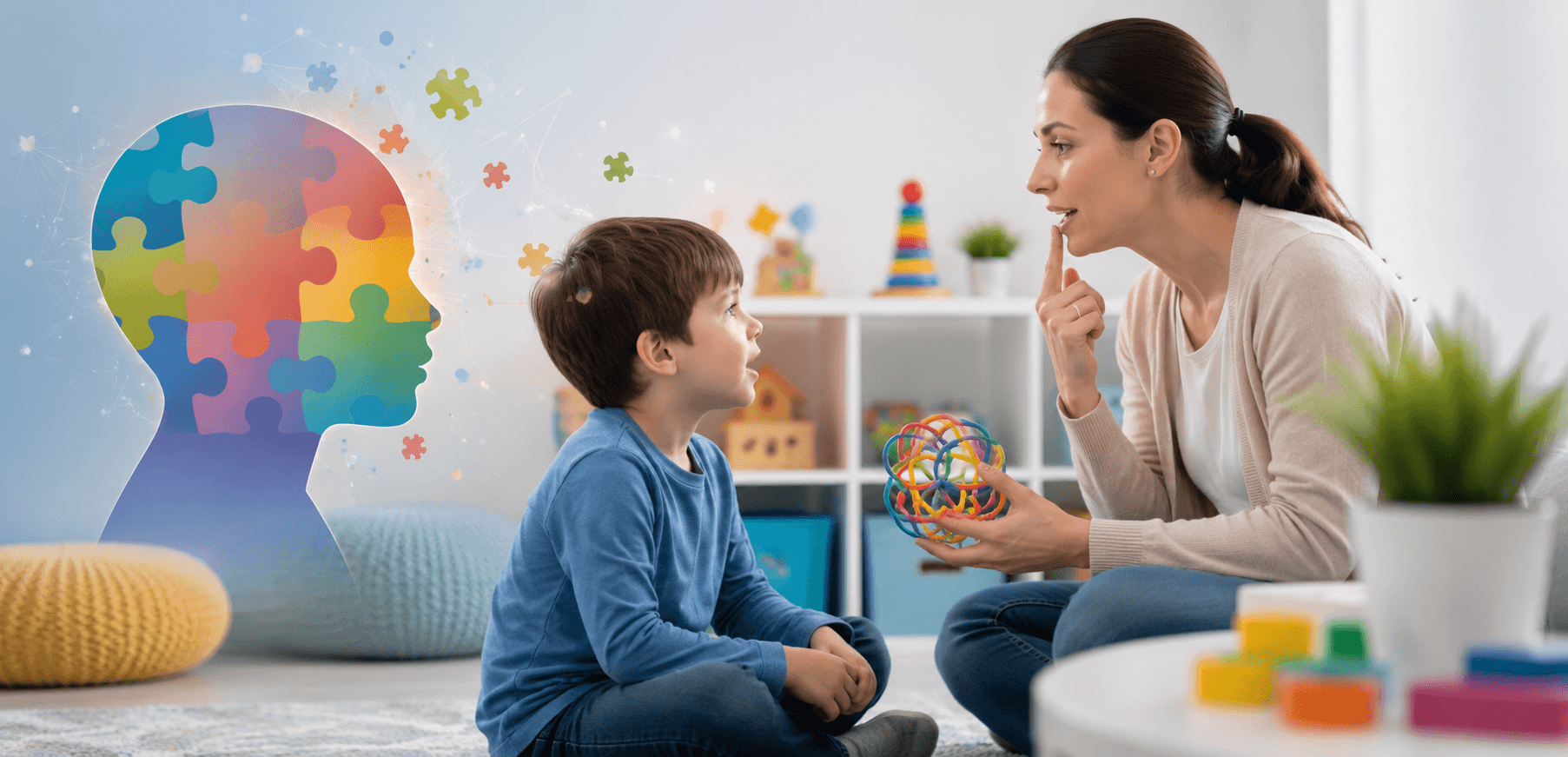
Autism spectrum speech therapy is a specialized, personalized form of support that helps children and adults on the spectrum build clearer communication, better social understanding, and stronger everyday confidence. For families who feel a little lost after a diagnosis, therapy can slowly become the piece that ties everything together. Every child on the spectrum processes language in their own way. Some are chatty but struggle with tone and turn-taking. Others rely on gestures, pictures, or AAC devices. A good therapist meets each child exactly where they are and moves at their pace, not the clock's. At StopStutter, we've worked with families across many ages and needs, and we know that steady, respectful progress always beats rushed results.
Speech Therapy for Autism Spectrum Disorder
Speech therapy for autism spectrum disorder covers a lot more than just teaching new words. It looks at how a person understands language, how they respond, and how comfortable they feel using speech in real settings. Some kids talk fluently but miss social cues. Others are non-speaking and communicate through gestures, sounds, or pictures. A number of autistic children also deal with disfluency, and structured support like online stuttering therapy can help them build steadier, more confident speech from home. Therapy works with what's already there and builds gently on top of it.
What a typical session looks like
Sessions are calm and structured, but they don't feel like school. There's play, visual aids, breaks, and lots of pausing so the child can respond in their own time. Parents often sit in and pick up techniques to use during the week.
Why early sessions matter
The earlier a child starts, the more natural language habits can form. Even a few months of therapy in the toddler years can shape stronger foundations for school and friendships later on.
Speech and Language Therapy Autism Spectrum Disorders
Speech and language therapy autism spectrum disorders programs usually focus on three areas: expressive language (how a person shares thoughts), receptive language (how they understand others), and social communication (turn-taking, humor, eye contact, reading the room). For many kids on the spectrum, that third area is the trickiest, because it depends on so many tiny cues happening at once.
Therapists blend all three so nothing ever feels forced. A five-year-old who repeats movie lines might use those very same lines as a bridge into short back-and-forth chats. A teenager who freezes during group work might practice small talk through role play until it feels less draining. The point isn't to change who the person is. It's to give them the freedom to communicate on their own terms, without shutting down or feeling left out.
Autism Spectrum Disorder Speech Therapy: Methods That Really Help
Autism spectrum disorder speech therapy uses a mix of approaches. No two children respond the same way, so most experienced therapists blend techniques, watch the child closely, and adjust week by week.
PECS and picture support
Picture Exchange Communication System helps kids who are just beginning to express needs. They hand over or point to a picture to ask for something, and slowly build up to short phrases and then full sentences.
Modeling in play
Instead of drilling flashcards, therapists talk during play. If a child is stacking blocks, the therapist narrates in short bursts: "Blue block on top. Now red one." Language starts feeling naturally tied to real life.
AAC devices
Some non-speaking children use tablets or dedicated speech devices. These aren't a last option or a form of giving up. Many kids who use AAC also grow their spoken language later on, once they feel less pressure to perform.
Autism Speech Therapy at Home
Autism speech therapy doesn't end when the session does. Parents and siblings play a big role, and small daily habits often matter more than one long weekly visit. Read the same book fifty times if that's what your child loves. Sing songs slowly. Give a few extra seconds for your child to respond instead of jumping in with the answer.
Keep language simple, but not baby talk. Instead of long sentences, break things down. "Shoes on. Then park." That kind of pacing helps a lot of kids on the spectrum feel less overwhelmed. If your child uses AAC, model it yourself. Press the buttons while you speak. It shows the tool belongs in daily life, not just in the clinic. Families we work with often share how these tiny shifts change dinner time, car rides, and bedtime routines. Little wins add up fast.
Speech Therapy for Toddlers with Autism
Speech therapy for toddlers with autism looks very different from therapy for older kids. At this age, sessions are almost fully play-based. Therapists get on the floor, follow the toddler's lead, and slip language into whatever they're already interested in. Loves trains? The whole session becomes trains. Trains going. Trains stopping. Trains crashing.
Early signs that a toddler could benefit from support include limited babbling, not responding to their name by twelve months, few gestures like pointing, or losing words they once used. Waiting to see if a child "grows out of it" usually just means losing valuable months. An early evaluation doesn't put a label on your child. It simply opens a door to gentle support that could shape the next few years in a very positive way. Small wins right now build up into real confidence later.
Speech Therapy for Kids with Autism
Speech therapy for kids with autism during the school years shifts focus a bit. Now it's about conversation, classroom communication, and friendships. Many kids on the spectrum are bright and have big vocabularies, but the flow of a group chat can feel overwhelming. They may talk at length on one favorite topic, miss when a friend is bored, or feel drained after a full school day of social effort.
Therapy at this stage often includes:
Conversation practice
Greetings, listening, and turn-taking in a natural way that doesn't feel like a test being scored.
Understanding emotions
Short stories, videos, or role play to learn what tones and expressions really mean in the moment they happen.
Handling frustration
Simple scripts and calming tools for those moments when words just don't come out right.
Parents often notice their child grows more settled and more confident, and starts building small but real friendships once these skills click into place. For extra reading, our speech therapy resources has plenty of parent-friendly guides you can share with grandparents and teachers too.
Frequently Asked Questions
At what age should we start speech therapy for a child on the autism spectrum?
As early as possible, ideally before age three. Those toddler years are when the brain is most flexible for language building, but speech therapy is still very helpful at any age, including adulthood.
How long does speech therapy for autism usually last?
There's no fixed timeline. Some children make noticeable progress in a few months, while others benefit from years of steady support. It really depends on age, communication needs, and how often the child attends sessions.
Will speech therapy help my non-speaking child talk?
Sometimes yes, sometimes not right away. What matters most is that your child gets a reliable way to communicate. Spoken words, sign language, PECS, or an AAC device are all valid and meaningful forms of connection.
Can parents do all the speech therapy at home?
Home practice is powerful, but a trained therapist brings skills that are difficult to learn alone. The strongest results usually happen when parents and therapists work together as a team.
Does StopStutter help with autism and not just stuttering?
Yes. Our team is trained across many speech and language needs, including autism-related communication, stuttering, articulation, and social language skills for all ages.
How do I know if my child is making real progress in therapy?
Progress often shows up in small, everyday moments. New words, longer eye contact, calmer transitions, or a first joke shared at the table are all signs that therapy is quietly doing its job.
Making Autism Spectrum Speech Therapy Part of Everyday Life
Autism spectrum speech therapy works best when it feels steady, patient, and matched to the person, not to a checklist. Every child grows at their own pace, and small wins deserve as much celebration as the big ones. Whether your child says the first clear word, uses an AAC device to ask for a snack, or joins a group chat without shutting down, each step counts and each step is real progress worth honoring.
At StopStutter, we bring years of speech therapy experience together with a warm, family-friendly approach. Our therapists work across autism, help in overcome stuttering, articulation delays and language challenges and we tailor every plan to the person sitting in front of us. To learn more about our team, browse our services, or book a first consultation.
Ready to Put This Into Practice?
Download the app and start practicing today
Reading is the first step. Real progress comes from consistent daily practice. Use StopStutter to build confidence and improve your speech every day.


