


ReviewJuly 25, 2026
Self-Mastery Through Autosuggestion
The heart and soul of our Neuroscience Method of Stopping Stuttering has its roots in the work of many others far wiser than we are. My talk today should help with much more than stuttering; it addresses life’s problems in general. We begin by introducing Émile Coué.
Émile Coué (coo-ay), a French pharmacist and psychologist, became famous in his day and remains so today for healing people—or, as he says, helping people heal themselves—by using:
Autosuggestion (AS),
Conscious autosuggestion (CAS), and
Subconscious autosuggestion (SCAS).
Repeating suggestions through CAS and/or SCAS was his method. The mind’s ability to cure ailments became apparent to him through the extensive use of placebos, which cured patients over and over again. In his career, there was evidence that his methods enabled hundreds of people to cure their physical ailments. In those days, the results of such cures were not documented; as such, naysayers debunk his claims, arguing that the ailments often returned. There is no way to know, but the value of AS, CAS, and SCAS is something that most readers can prove, with diligence, for themselves.
This writer finds these methods extremely helpful in many ways: improving memory, reducing or eliminating many pains, and improving all aspects of attitude, character, and one’s karma. Pythagoras, Aristotle, and the Oracles of the Ancients used AS through the repetition of desired thoughts and results. As Aristotle said, “A vivid imagination compels the body to obey it… Thus, entire organisms can be modified…” He added this caveat: “However vivid the imagination, it cannot change the form [shape] of a hand or foot.”
Only since about 2005 has the medical community begun to embrace Coué’s approach—in books such as those by Doidge, Amen, Lipton, Carnegie, Napoleon Hill, etc. The ability of the individual to change his or her brain through “neuroplasticity” is rapidly becoming a tidal wave. Naysayers always persist, but the positive case histories are compelling, including my own and those of many people who have beaten stuttering using this program.
Millions have proved, to a significant degree, that: (1) repetition of positive thoughts will control the Conscious Mind (CM); (2) repeated thoughts will be picked up by the ever-sensitive Subconscious Mind (SCM); and (3) over time, and generally within a few days, both the CM and SCM will do our bidding and accept and implement the daily repeated suggestions.
These “cures” are NOT permanent! They will work only as long as we continue the daily repetitions. However, over time, most of them will become deeply embedded in our psyches and, therefore, in our bodies, thoughts, and conduct. They will replace fears of speech and solve myriad other problems for us. To wit, consider these specific suggestions for helping children.
Raising Children
(1) Do not speak ill of others, as it teaches children to do the same, and backbiting leads to other negatives.
(2) Never use physical punishment.
(3) Never tell children that they are stupid, and do not call them liars, as suggestions tend to become realities.
(4) Do not complain about your physical ailments, as doing so may encourage the same ailments in them.
(5) Make work appealing.
(6) Make education fun and rewarding.
(7) A child’s pliable mind assimilates suggestions much more easily than an adult’s does, and many of those suggestions become permanent.
(8) A sleeping infant can be influenced by talking quietly to the child while he or she sleeps.
(9) Teach by example. Set the best example that you can.
Monotonous Repetition; Light Focus; Intense Concentration; and Visualization
MR is one of the best methods of reaching the Subconscious Mind. Do this by yourself before you go to sleep: inhale and exhale deeply until you are relaxed, and then repeat the instruction 20 or more times, as Coué suggests. Visualize yourself successfully acting out the suggestion. Coué’s most famous instruction to repeat is:
“Every day, in every way, I am getting better and better.”
Recite this phrase like a litany every night before you go to sleep and/or before you arise. The mind does not need the details; our minds know what our bodies need to do to heal or cure themselves. This explains why placebos often work, why hypnosis can remove the pain of a dentist’s drill, and why it can even mute cancer pain when morphine no longer works.
Coué even says, “Don’t concentrate; leave concentration to your subconscious mind.” Close your eyes and focus on being relaxed as you repeat your instructions to yourself. Do not struggle; just let it happen. Your Subconscious Mind (SCM) cannot be forced to do anything. It is ever alert for suggestions and knows what to do with them.
Today’s neuroscientists approach it differently. Some say that you MUST concentrate as much as possible and that, without concentration, it will not work. Other physicians take the middle ground: one should pay attention and remain focused on the suggestion, but not force it.
I use all three methods: (1) concentrate hard; (2) think the thought, but do not force it; and (3) simply repeat it without concentrating. Concentration is hard to sustain anyway; the mind will wander. Therefore, I try to stay focused, but I do not worry when my mind wanders a bit. I know that enough repetitions and enough visualizations of myself doing it WILL work.
Coué suggests that you recite the suggestion out loud, although softly and in a monotonous tone. It will be received by your Conscious Mind (CM) and, if you are deeply relaxed, by your Subconscious Mind (SCM). After enough repetitions, you will reach your SCM regardless. Once your SCM accepts the suggestion, it becomes your natural thought.
Repeating it before you arise in the morning will reinforce it. Repeating it now and then during the day will further reinforce it. Autosuggestion will always bring about some improvement, even in incurable diseases. Autoconditioning is accomplished through endless repetition; the more relaxed you are, the more effective your words will be.
Conscious vs. Subconscious
As Coué wrote:
“The conscious mind is but a small islet in the vast sea of the subconscious mind… The subconscious both receives and transmits ideas; it misses nothing. We are free to implant any ideas we wish… It is impossible to separate the body from the mind; the mind sends messages to all cells; our physical condition depends on our mental condition… It is the subconscious mind that sends blood to the area of a cut or evokes pain at the point of an injury… The mind can speed or slow the heartbeat…”
The Conscious Mind is like an unbroken horse. Without a bridle and reins, the rider must go wherever the horse chooses. Once the bridle and reins are in place, the rider takes charge. When we take control of our minds through autosuggestion, sooner or later, our minds will respond as we direct them. The time required varies a great deal. IF we do not give up, and if we stay with it, we will win this battle.
Some examples of instructions that we might give ourselves follow:
“I shall remember in a minute all that I have forgotten.”
“I shall feel no more pain in my _____.”
(Coué suggests rubbing the area and saying, “It passes.”)
“I am going to sleep now… I will sleep now… I am sleepy… I am fast falling asleep… I will awake at ___ o’clock…”
The foregoing and similar instructions should be given in a steady, monotonous tone until you fall asleep.
“Since I can say one word, I can say any word, and I shall not stutter in the future.”
“Every day, in every way, my memory is getting better.”
Only one thought is possible at any given time. You can dictate it. When you do not dictate it, an external source will: a good or bad event, a positive or negative person, a good or bad book, music, television, or something else. When you are not taking charge of your mind and dictating your thoughts, you are ceding that power to external forces.
Examples of Positive Suggestions to Be Repeated 20 Times Each Day
These are NOT commands to your mind; they are relaxed SUGGESTIONS.
Our CM and SCM are incredibly sensitive and will respond, for example, to these:
“Every day, in every way, I grow better and better.”
“Every day, my memory grows better and better.”
“I love to learn, and I shall remember what I learn.”
“Every day, I feel less pain in my _____.”
“Every day, I feel less anger.”
“Today, I will reject all angry thoughts.”
“Today, I will be more loving toward everyone.”
“Today, I will seize all opportunities to laugh and make others laugh.”
“Today, I will project positive, uplifting, and happy karma toward everyone.”
“Today, I shall make it a happy day.”
When and where do we make these suggestions? Anywhere, especially whenever we are idle, such as while sitting in a waiting room, riding on a bus, traveling in a cab, before going to sleep, or before arising in the morning.
My favorite time is while doing aerobics—in my case, while riding a recumbent bike. I do this daily for 45 minutes, which gives me an opportunity to give myself about ten suggestions, repeating each one 30 times as I count the repetitions on my fingers. For some of the suggestions involving areas where I need extra work, I may do two sets of repetitions.
Since I can grow weary long before 45 minutes has elapsed, I insert encouraging AS statements here and there, as needed, along these lines:
“I love to bike [walk, use the treadmill, etc.].”
“The bike gives me energy.”
“The bike feeds my mind, my heart, and my body.”
If I am consistent, missing only a few days here and there, this works over time. Your attitude and mine will soon improve many times over, every day. Pain and negative thoughts are reduced dramatically, reduced sufficiently to make them tolerable, or totally eliminated.
I am overjoyed to be learning to become “the Boss of My Mind.” I have taken the steering wheel between my ears. No one can take it from me. My happiness, therefore, is not dependent upon anyone else. You should do this now.
Life is perception. Life is what we make it. By using daily autosuggestion, my mind is taking the fastest road toward a positive, productive, self-disciplined, and happy life.
Make a Program
(1) Read Émile Coué’s 59-page book, Autosuggestion: My Method.
(2) Practice Coué’s autosuggestion techniques for approximately 20 minutes each day.
(3) Do some sessions with one of our Certified Stuttering Specialists (CSS).
Finally, read The Brain That Changes Itself by Dr. Norman Doidge and The Biology of Belief by Dr. Bruce Lipton. The stuttering-related books that I wrote, which are available on Amazon and in our program, should also help.
As of this day in July 2026, all of the above constitutes my best “Life Advice”!
Take it—and I know that you will make your life better!
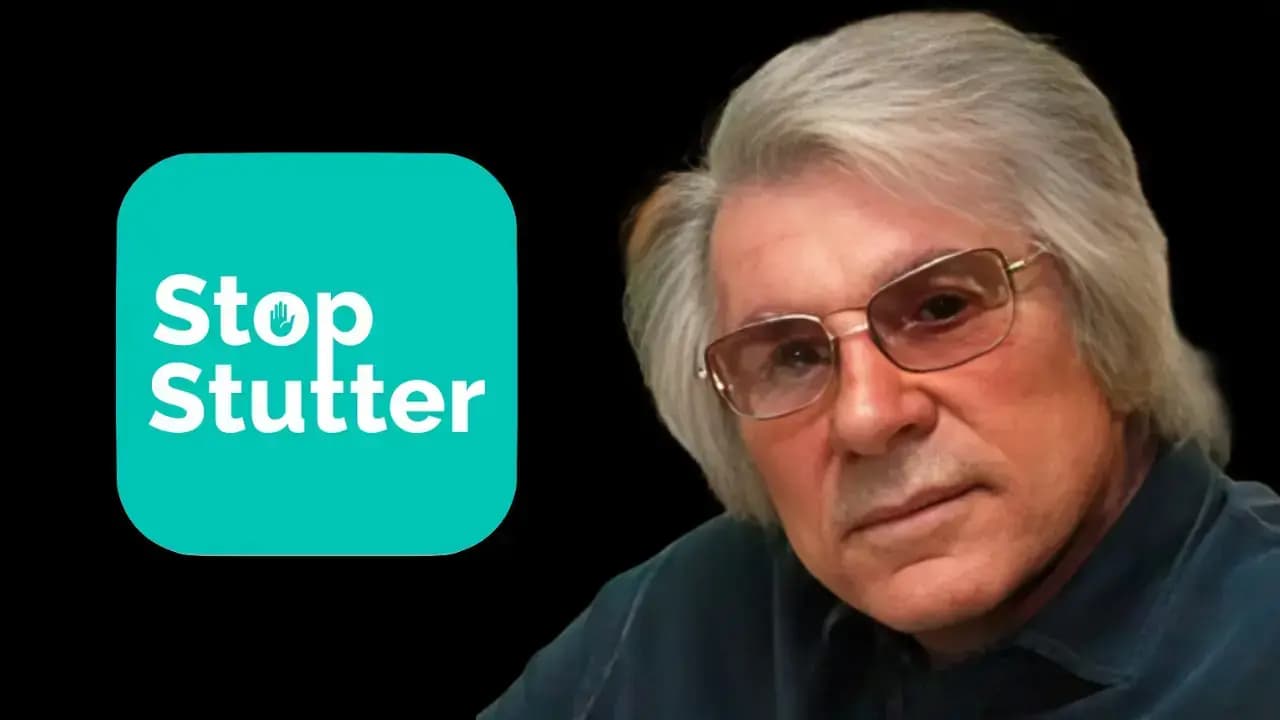
Coach Lee Lovett
Ready to Put This Into Practice?
Download the app and start practicing today
Reading is the first step. Real progress comes from consistent daily practice. Use StopStutter to build confidence and improve your speech every day.


