


ReviewSeptember 15, 2026
Stuttering in 4 Year Olds
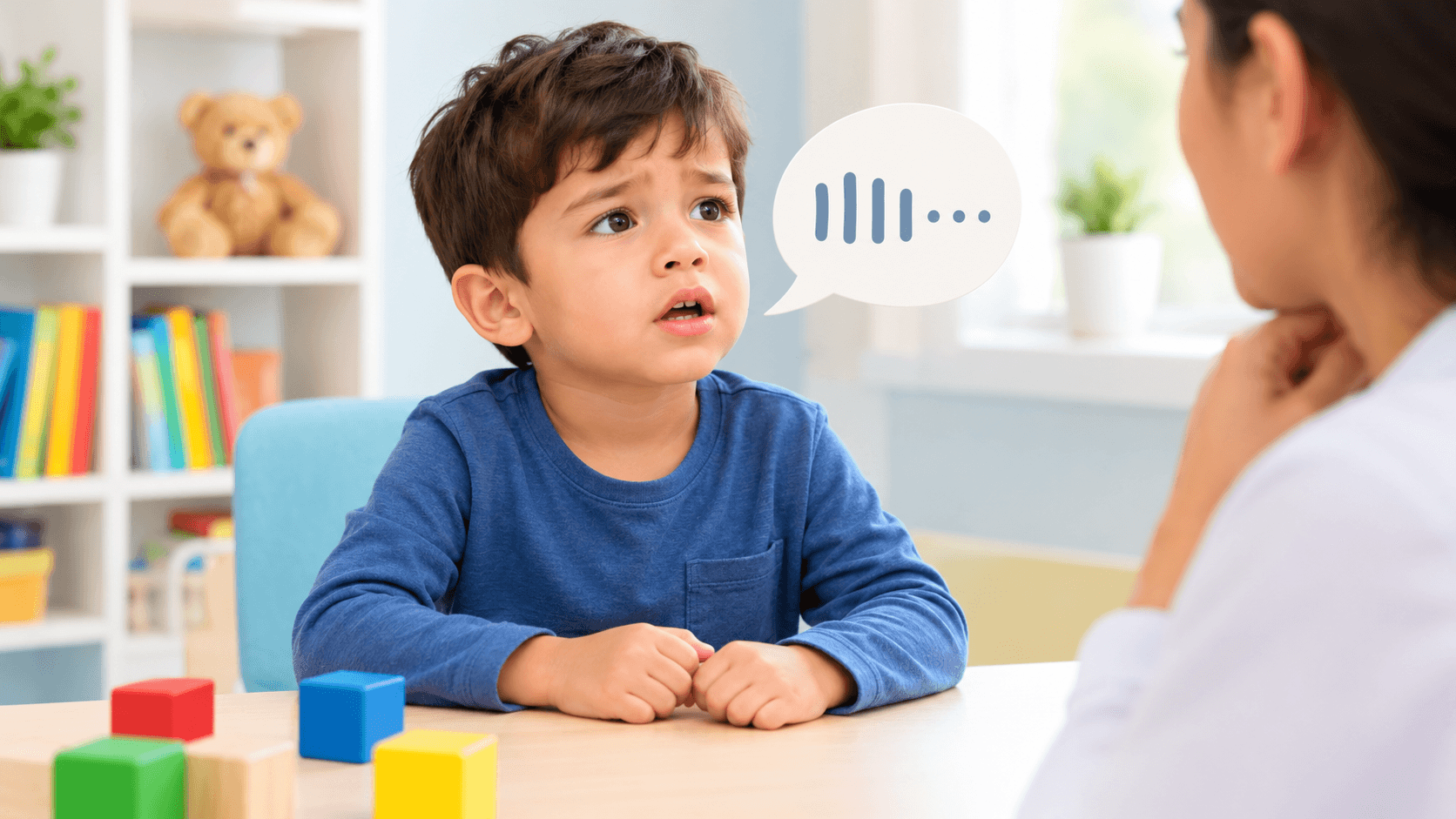
Stuttering in 4 year olds usually shows up as repeated sounds, stretched words, or small pauses right in the middle of a sentence, and yes, it can rattle you the first time you hear it. Most preschoolers move through what specialists call a "disfluency phase," where their thoughts race way faster than their little mouths can keep up. Some kids sail past it in a few weeks. Others hang on to it, and that's when parents start hunting for real answers. Here's the good news right up front: with the right support, most children can overcome stuttering before it settles into a lifelong habit.
4 Year Old Stuttering
At four, kids are hitting a language explosion. They're stacking new words on top of each other, testing tricky questions, telling stories that go on and on with no punctuation. So a bit of stumbling isn't strange. But there's a real difference between typical bumps and a stutter you want to pay attention to.
What "normal" disfluency looks like
Repeating whole words ("I, I, I want juice"), pausing mid-thought, or restarting a sentence is standard for this age. It comes and it goes. Some weeks it's loud, other weeks it disappears entirely.
When to sit up and take notice
If your child starts repeating single sounds ("b-b-b-ball"), stretching words ("mmmommy"), or physically pushing to get words out, that's a signal worth acting on. Little tells like blinking hard, jaw tension, or dodging certain words are part of the picture too.
4 Year Old Stuttering All of a Sudden
Sudden stuttering feels alarming because it seems to arrive without warning. One week your kid is chatting away non-stop. Next, they're stuck on the first sound of every sentence. What happened?
Common triggers behind sudden onset
Big life changes are usually somewhere in the mix. A new baby, moving houses, starting preschool, a parent traveling for work, or even a shift in the daily routine can nudge a sensitive nervous system. Heavy screen time has been flagged in some studies too. It's rarely one thing, more like several small things stacking up together.
Should you wait it out?
Some pediatricians will tell you to wait six months and see what happens. That advice made sense decades ago, but the current thinking has moved on. Getting a professional opinion sooner rather than later gives you more options and less regret. Plenty of families now start with online stuttering therapy so they don't waste weeks driving from clinic to clinic while their child's habit deepens.
4 Year Old Started Stuttering Out of Nowhere
If it feels like your child started stuttering overnight, you're not making it up. Some kids genuinely do develop symptoms in a short window, and the "out of nowhere" feeling is one of the most reported experiences among parents in support groups.
The brain's role
Speech is one of the most complex tasks the human brain performs, honestly more complex than most sports. There's a coordination piece between the parts that generate language and the parts that control the mouth. In some kids, that coordination gets thrown off during rapid growth stages. It isn't something the child is doing on purpose, and it's absolutely not a sign of low intelligence. Many children who stutter actually score above average on verbal reasoning tests.
Family history matters
If a parent, grandparent, uncle, or older cousin stuttered as a child, the odds go up noticeably. Genetics don't guarantee anything, but they set the stage.
4 Year Old Stuttering at Beginning of Sentence
You might notice your child gets stuck mostly at the start of sentences. The first word feels heavy. They pause, take a breath, sometimes rephrase, then get going once the sentence is rolling. This pattern is really, really common.
Why the first word is the hardest
Starting a sentence takes the most planning. Your child has to figure out what they want to say, pick the right word, and coordinate breath, voice, and mouth all at once. Once the sentence is moving, momentum carries the rest. That's why kids often sail through the middle and end of what they're saying but trip right at the start.
How to make sentence starts easier at home
Slow your own speech down first. Pause after your child speaks before you jump in with a response. Cut back on rapid-fire questions. If you want to know what happened at school, try commenting instead of interrogating. Something like "looks like you had fun on the slide" invites a story without pressure. These small shifts help their nervous system settle.
Why Did My 4 Year Old Start Stuttering: What Does That Mean?
This question deserves a straight answer. Stuttering at four means your child's speech system is a little out of sync right now, but it doesn't define who they'll be. It's not caused by bad parenting, TV, or something you did or didn't do. It's a neurological pattern, not a character flaw.
What it doesn't mean
It doesn't mean your child is broken. It doesn't mean they'll always struggle. It doesn't mean they can't learn, lead, or perform on a stage one day. Some of the most confident public speakers alive today stuttered as kids.
What it does mean
It means you have a real opportunity. Early is easier. The younger the child, the more responsive the brain is to change. Waiting and hoping the stutter fades on its own is a gamble that doesn't pay off for every family. Taking action, on the other hand, almost always improves the outcome.
How to Manage an Anxious Stutter
Some kids stutter more when they're excited. Others stutter more when they're nervous. The anxious stutter, the kind that spikes before a class presentation or a big family gathering, is its own category. Handling it takes a different approach than tackling the physical stutter alone.
Notice the trigger, not just the symptom
Watch for what happens right before your child gets stuck. Is it a specific person? A certain kind of question? A loud, crowded room? Understanding the trigger lets you plan around it without your child feeling singled out.
Give them tools, not lectures
Teaching a four year old how to take a slow breath before starting a sentence works far better than telling them to "just calm down." Practice these tools when they're relaxed, so they're actually available when it matters. Praise the effort, not just the outcome.
Protect their confidence at all costs
Never let anyone finish their sentences for them. Never let a sibling mimic the stutter, even in play. Kids pick up on shame fast, and shame makes stuttering worse every single time.
The Neuroscience Method Explained
Traditional speech therapy mainly focuses on managing symptoms. The neuroscience stuttering method developed by Stop Stutter takes a different angle. It works on the underlying wiring that keeps the stuttering pattern in place. The core idea is simple: speech is a habit built by the brain, and habits can be rewired at any age, especially in young children whose brains are still highly plastic. Families using this approach with cases of stuttering in 4 year olds often see meaningful change within weeks, not years. It blends calming techniques, structured practice, and parent coaching so the work continues at home in the kitchen, in the car, at bedtime. If your child is already showing patterns you'd like to shift, this is a framework worth reading about carefully before you commit to any single path forward.
Frequently Asked Questions
Why is my 4 year old stuttering all of a sudden?
Sudden stuttering at four is very common because this is when language takes a huge leap. Your child is learning new words and longer sentences faster than their speech system can keep up. Excitement, a new sibling, starting preschool or other changes can also trigger it. It usually isn't something you caused, but it is worth watching closely.
What does stuttering look like in a 4 year old?
You may hear repeated sounds or words like "I-I-I want," stretched sounds such as "ssssnack," or moments where your child gets stuck and no sound comes out. Some kids blink, look away or tense their face while talking. These physical signs and silent blocks suggest the stutter may need expert attention rather than a wait and see approach.
Does stress or excitement make my child's stuttering worse?
Yes, it often does. Stuttering tends to spike when a child is rushed, tired, overexcited or trying to talk over others. It can also come and go in cycles, with smooth weeks followed by bumpy ones. Keeping daily routines calm and predictable, and giving your child unhurried time to talk, can ease a lot of the pressure they feel.
How can I help my 4 year old who stutters at home?
Set aside a few minutes each day for relaxed one-on-one talk with no screens around. Speak a little slower yourself, keep eye contact and wait patiently until they finish. Praise what they say, not how smoothly they say it. Small, steady moments like these build confidence and give your child a calm model of speech to copy.
Should I tell my child's preschool teacher about the stuttering?
Yes, a short chat helps a lot. Let the teacher know your child sometimes stutters and ask them to give extra time to speak, avoid finishing their sentences and step in if other kids tease. When home and school respond in the same calm way, your child feels safe to keep talking instead of going quiet in class.
What happens during a stuttering evaluation for a 4 year old?
A specialist listens to your child talk and play, looks at how often and how hard they stutter, and asks about family history and when it started. For your child it feels like relaxed play time. You leave with a clear picture of where things stand and practical next steps. StopStutter offers a free consultation to help you get started.
Next Steps for Parents Dealing with Stuttering in 4 Year Olds
Stuttering in 4 year olds is not a life sentence. It's a signal that something in the speech system needs support, and support is genuinely available. Start by watching your child for a full week and jotting down when the stuttering feels heaviest, lightest, and completely absent. Take that log with you to whichever professional you choose. Whether you go with a local speech therapist, an online program, or a neuroscience-based approach, the earlier you begin, the more room your child has to grow into a confident speaker. You've already taken the first step by looking for real answers. That matters more than you might realise right now.
Ready to Put This Into Practice?
Download the app and start practicing today
Reading is the first step. Real progress comes from consistent daily practice. Use StopStutter to build confidence and improve your speech every day.


