


ReviewDecember 23, 2021
The Science of Stuttering & The Neuroscience Method
I am the bearer of good news: the science of stuttering does not support the long-held belief that stuttering and semi-muteness are incurable or must be accepted. In fact, research and practical evidence show that stuttering and muteness can be converted into enjoyable fluency.
Throughout history, new ideas have often faced resistance. Dr. John Bernal, a world-renowned Irish scientist, captured this perfectly in his concept known as Bernal’s Ladder. It humorously illustrates how the scientific community reacts to new ideas:
- First, they say it’s not true.
- Then, they say it may be true but it’s not important.
- Next, they say it may be important but it’s not original.
- Finally, when it can no longer be denied, they concede, saying, “Well, it may be original, but it’s what I always thought.”
With this in mind, let’s examine the question: does science support the claim that stuttering and muteness are incurable and must be accepted? Over the past six years, our team has conducted extensive research: more than 6,000 individual coaching sessions with people who stutter, over 1,500 videos documenting these sessions, thousands of emails with stutterers, a 700+ page book, comprehensive video courses, online forums, blogs, and 80 meetings of our Speech Anxiety Masters club. Our team includes speech therapists, M.D.s, Ph.D.s, university professors, teachers, and most importantly, people who have stopped stuttering. Research and case studies continue seven days a week.
The problem is clear: stuttering and severe speech anxiety are a worldwide crisis. Many affected individuals go silent in multiple situations, and some are pushed to the edge of despair or even suicide. Estimates suggest that 70 million people stutter globally, with hundreds of millions more experiencing semi-muteness to avoid perceived speech risks.
The long-standing belief has been that stuttering is incurable and must be accepted. Yet, there is no substantial evidence to support this. In the past decade, research and practical experience have demonstrated that stuttering and semi-muteness can and should be addressed, allowing individuals to enjoy fluent speech. Before reviewing the evidence, we must clarify what “science” means. Many assume science is limited to academic fields like chemistry, physics, or biology. In reality, science is the systematic study of any subject, and expertise comes from diligent, methodical study and observation. Medical degrees or academic credentials alone do not define scientific authority. Rational inquiry and evidence, gained through repeated experimentation and observation, define scientific findings.
What scientific evidence supports the claim that stuttering is incurable? Very little. Most conventional approaches by speech professionals fail to produce lasting results. In fact, studies suggest that over 90% of speech professionals have never stuttered, and the remaining 10% still stutter. Without firsthand experience, they cannot fully understand the condition, much less help others overcome it. Failed cases have often been misinterpreted as proof of incurability.
In contrast, the evidence supporting successful treatment comes from people who have stopped stuttering. Our community has created a wealth of tangible proof:
- A Stutterers’ Speech Hall of Fame, featuring nearly 200 success stories of people who stopped stuttering, with more added regularly.
- Video documentation of success stories and, in some cases, their stuttering history.
- A comprehensive website offering programs, resources, and practical tips for people who stutter.
- The Speech Anxiety Masters club, meeting weekly with dozens of participants from around the world.
- Blogs, forums, and email updates offering guidance and encouragement.
- A global community of people who have stopped stuttering and those progressing toward the same goal.
- The World Stop Stuttering Association, a 501(c)(3) nonprofit dedicated to supporting people who stutter.
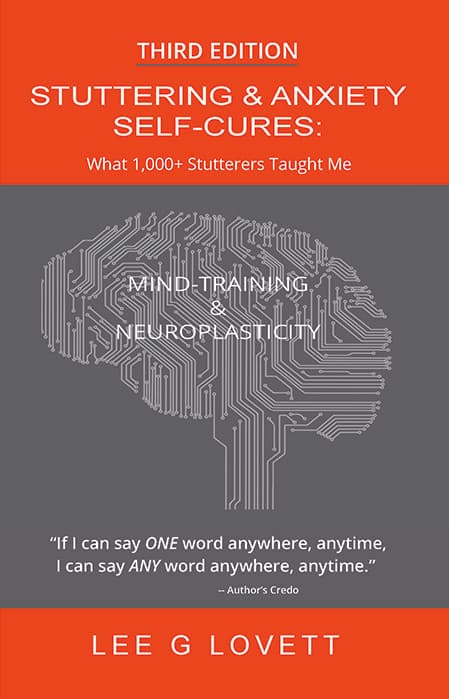
The conclusion is clear: the most significant scientific evidence comes from real-world results of people who have stopped stuttering. Nearly all participants who follow the program achieve fluency. While some may not engage fully, over 90% succeed, with less than 5% reporting later relapses. The exact numbers matter less than the overwhelming pattern of success. It is time to end the misinformation that stuttering is incurable and must be accepted. The evidence shows that fluency is achievable. Our guiding principle is simple: if you can say one word anywhere, anytime, you can say any word, anywhere, anytime.
Ready to Put This Into Practice?
Download the app and start practicing today
Reading is the first step. Real progress comes from consistent daily practice. Use StopStutter to build confidence and improve your speech every day.


