


ReviewDecember 7, 2020
Using Neuroscience To Stop Stuttering
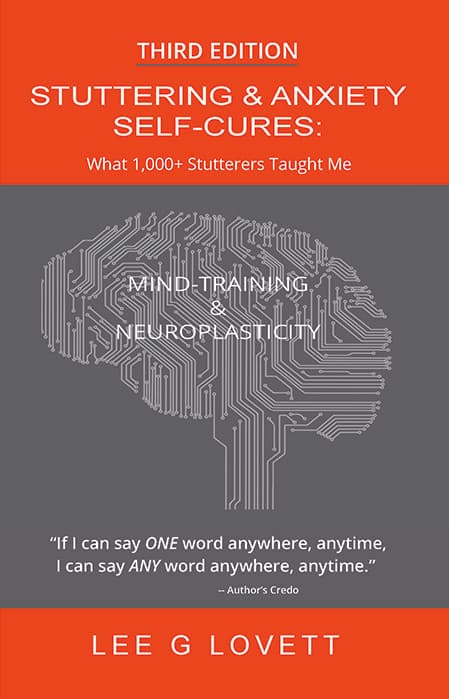
Neuroplasticity entered the medical scene around the year 2000. It asserts that the brain is like plastic and that its performance can be changed, both organically and inorganically, throughout our lives. In simple terms, desired changes can be achieved by visualizing and hearing those changes in action. Since the brain already knows what to do, we only need to give it general instructions rather than attempting to dictate the details—which we rarely understand anyway. But what does neuroplasticity have to do with reading aloud?
As discussed below, the sound of your voice provides energy—a kind of nourishment for the brain. This has been demonstrated in many studies. Consider, for example, the case of the Benedictine monks at the Abbaye d’En Calcat, who lived under a vow of silence but sang Gregorian chants for six or more hours a day. During the Second Vatican Council (1960–1965), the Church decided that chanting served no practical purpose and ordered it to stop. Soon after, the monks suffered what was described as a collective nervous breakdown. They became weak, listless, and slumped over as if near death.“They were starved for the energy of sound,” said Alfred A. Tomatis, M.D. (1920–2001), a French otolaryngologist and inventor of the Electronic Ear, who was called in to help. When the chanting resumed at his suggestion, the monks quickly returned to good health. Tomatis’ method, in simple terms, held that the ear—and what it hears—has a powerful effect on the brain and its performance. The sound of our own voices, as well as certain music (especially the structured works of Mozart), can contribute greatly to brain health.
Tomatis wrote 14 books and over 2,000 articles exploring how hearing affects the brain and how sound can help heal mental and neurological disorders such as autism, depression, dyslexia, and speech issues. Although his ideas were controversial at the time, much of his work is now finding support in modern neuroscience, thanks to researchers like Norman Doidge, author of “The Brain That Changes Itself.” More than 30 studies have explored the Tomatis Method, and one review reported that around 60% of autistic children benefited from the therapy. Other studies found positive results in treating stuttering, developmental delays, and a range of psychological disorders. “Sound is neuroplastic,” explains Dr. Nina Kraus of Northwestern University, an expert in the field. Using electrical sensors to measure brain waves as subjects listened to sound, she found that neurons can be entrained—stimulated or carried along—by non-electrical input like voice or music. In fact, neuronal wave patterns were seen mirroring the rhythmic waves of a Mozart composition.
“The ear is a battery to the brain,” said Tomatis. Dr. Doidge adds, “Therapeutic music can lift the spirit by increasing dopamine levels and improving people’s moods. Sound lifts spirits. Normal sounds help neurons fire together so that the brain becomes more efficient.” In other words, good listening, speaking, and sound stimulation all play vital roles in maintaining brain health. As logic would suggest, we need to hear our own voices—especially when performing at our best. Doing so strengthens the brain, supports dopamine production, and enhances our overall well-being. This is why simply accepting stuttering is not the best choice if an alternative exists—and it does. When we read aloud, we hear our voices at their strongest and most fluent. Reading aloud also helps replace stuttering memories with fluent ones and teaches us to speak with emotion and confidence. It energizes the brain, reinforces fluency, and promotes mental health. For these reasons, we should make reading aloud a consistent, passionate practice.
I continue to read aloud every day, and it remains one of the most uplifting parts of my routine. I encourage everyone to do the same.
Ready to Put This Into Practice?
Download the app and start practicing today
Reading is the first step. Real progress comes from consistent daily practice. Use StopStutter to build confidence and improve your speech every day.


