


ReviewSeptember 10, 2026
3 Year Old Stuttering
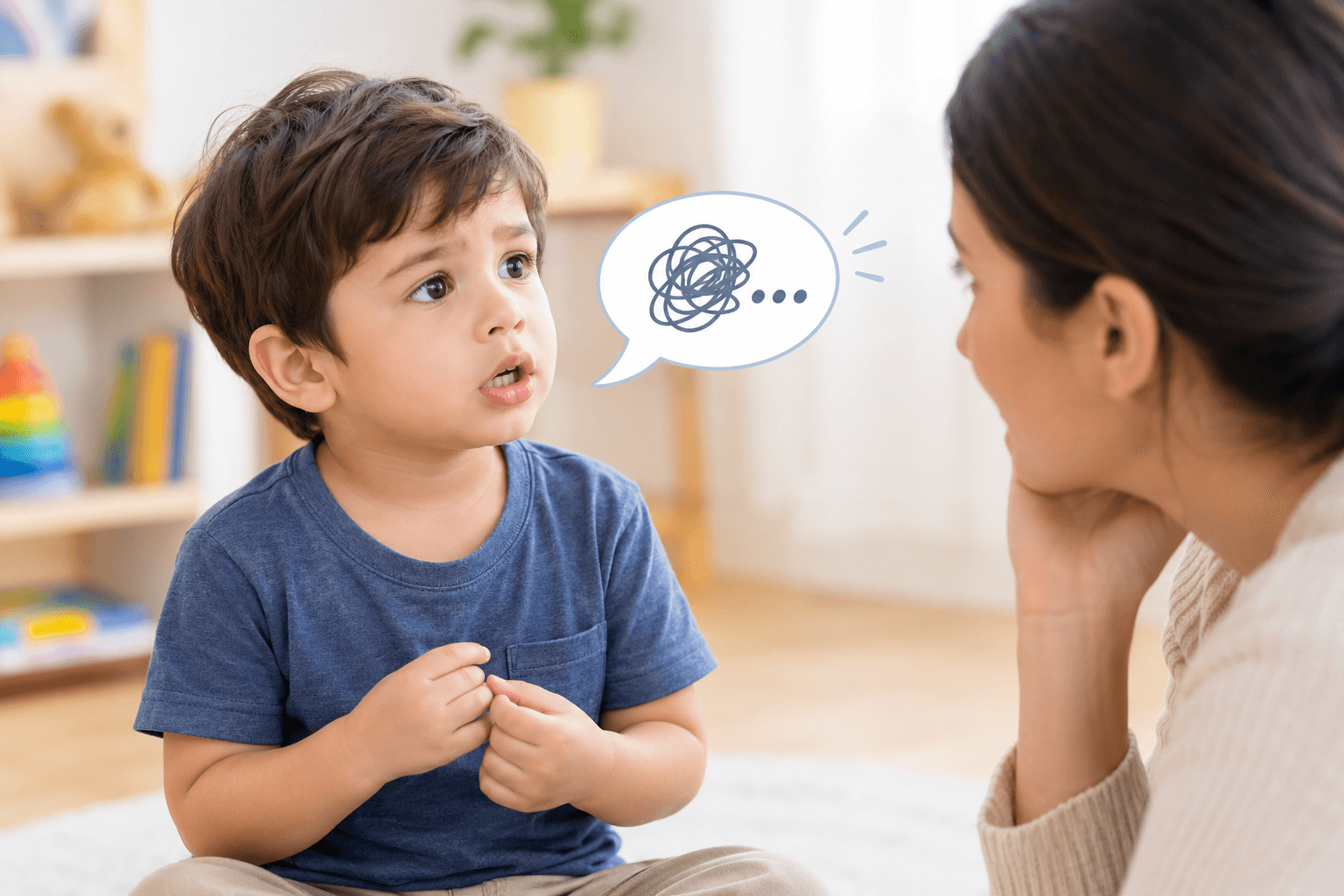
3 year old stuttering is very common and, in most cases, a normal stage of speech development. Around this age, your child's vocabulary grows faster than their mouth and breath control can keep up with, so you may hear repeated sounds, stretched words, or little pauses when they talk. It can even show up suddenly in kids whose speech is already quite advanced. About three out of four children who start stuttering young grow out of it on their own. To understand the bigger picture and what actually helps, start with our guide on how to stop stuttering.
My 3 Year Old Started Stuttering (Should I Worry?)
The first time you hear your child hesitate on a word or repeat a syllable a few times, your mind naturally races. "My 3 year old started stuttering, is something wrong?" You're not alone in that thought. Almost every preschooler goes through some bumpy, repeated speech while their language is growing fast, and for most kids it settles down on its own. Three-year-olds are in a huge language jump, learning nouns, verbs, and small stories all at once. Their tiny tongue, jaw, and breath control simply can't always keep pace with what their brain wants to say.
Try to notice the pattern, not the panic. Is it only happening when they're tired or excited? Do the moments last a second, or stretch on with visible strain? Watching quietly, without reacting, helps you tell a normal growth wobble from something worth checking on later.
Signs that usually pass on their own
Short repeats of easy words like "and-and-and"
Stuttering only when excited or telling a big story
No visible tension in the face or shoulders
Sudden Stuttering in 3 Year Old: What It Really Means
Parents often describe sudden stuttering in 3 year old kids as something that showed up almost overnight. One week your child is chatting away, the next you're hearing "b-b-b-but" on repeat. This shift is common and rarely a sign of anything serious. Sudden bursts often line up with big life changes: a new sibling, a move, starting preschool, or even a sleep dip during a growth spurt. The brain is juggling a lot, and speech is the delicate outer layer that can wobble first.
Here's where gentle guidance matters more than pressure. Correcting your child, filling in their words, or asking them to slow down often adds tension to something that felt effortless before. Keep your own pace slow and warm, hold eye contact, and give them your full attention. That one shift can quietly reduce the fear that sometimes builds around speaking.
If the sudden stuttering carries on for more than a few months, or your child starts avoiding words, our program offers structured, at-home support through online stuttering therapy that respects your child's pace and never pushes them to perform.
Quick calming shifts to try today
Slow your own speech by about twenty percent when you reply
Pause a beat before answering their question
Read aloud together in a soft, unhurried voice
3 Year Old Started Stuttering: Everyday Triggers Parents Miss
When a 3 year old starts stuttering more often, the trigger is usually hiding in plain sight. Overstimulation is a big one. Loud playdates, too many questions in a row, or hurried mornings can push a child's speech into a bumpy rhythm. Some kids get more disfluent right after screen time, others when they're being rushed to eat or dress.
Family speech pace matters too. If everyone around your child talks fast or finishes each other's sentences, your little one may feel pressure to keep up. Their still-developing speech system just can't do that yet.
You don't have to change everything at home. Small tweaks add up. Try one calm conversation window a day, maybe at bath time or before bed, where nobody hurries and nobody corrects. That small pocket of easy speech slowly becomes the model your child leans on.
Common everyday triggers
Tiredness or missed naps
Too many yes-or-no questions in a row
Being asked to "perform" for relatives
Loud, fast-paced environments
3 Year Old Started Stuttering Out of Nowhere
If your 3 year old started stuttering out of nowhere, take a breath. This is one of the most searched worries by parents, and there's a reason for it. Speech at this age isn't linear. Kids can jump forward in vocabulary in a single week, and that sudden burst of new words can outrun their mouth's ability to shape them cleanly. What looks like a step back is often actually a step forward.
Emotional shifts count too. A big move, a new caregiver, or a change in your work routine can create quiet stress that shows up in speech first. Kids don't always have the words to say "I feel off." Their speech does the talking for them.
A helpful mindset shift, one many families in our community have used, is to see stuttering as a habit that's still forming, not a fixed part of who your child is. This softer, more hopeful framing sits at the heart of the approach explained in this article on how stuttering can be cured, which many parents find refreshingly calm.
Is Stuttering Normal for a 3 Year Old?
If you're asking, is stuttering normal for a 3 year old, the honest answer is yes, more often than not. Speech researchers generally agree that about five to eight percent of children pass through a stuttering phase before starting school, and most grow past it. That doesn't mean you should ignore it. It means you can respond from a place of calm rather than fear.
Normal disfluency at this age tends to be short, light, and free of visible tension. Your child might repeat a word once or twice, then move on. They usually don't seem bothered by it. It's a soft bump, not a stuck wheel.
What is worth watching more closely is stuttering that lasts past six months, comes with facial tightness or head jerks, or makes your child dread speaking. If any of those show up, a specialist evaluation is a smart next step.
Green flags versus watch-out signs
Green flag: soft repeats, no tension, child unbothered
Watch out: stretched sounds, blocks, or avoiding talking
Causes of Stuttering in 3 Year Old
The causes of stuttering in 3 year old children are still being studied, but researchers point to a mix of factors working together. It's rarely one single reason. Understanding the mix lifts a lot of guilt off your shoulders, because parenting style is not the driver here.
The main factors researchers point to
Genetics: children with a family history of stuttering are more likely to show the pattern
Brain wiring for speech: subtle differences in how speech signals travel can affect timing
Language explosion: rapid vocabulary growth outpaces small speech muscles
Temperament: sensitive, thoughtful kids sometimes show more disfluency during change
Environment: fast talking, frequent interruptions, or high-pressure moments
Notice that stress alone doesn't cause stuttering. It can make an existing pattern more visible, but it isn't the root. The same goes for bilingual homes. Learning two languages doesn't create a stutter, though it can sometimes make the pattern show up a bit longer while your child sorts through two vocabularies. Knowing the mix helps you focus on what you can gently shape rather than what you can't.
The Neuroscience Method Explained: A Gentler Way to See Fluency
The neuroscience method developed by our founder Lee G. Lovett is built on a simple, hopeful idea: the human brain keeps rewiring itself throughout life, and speech habits can be reshaped just like any other habit. Instead of treating stuttering as something to hide or push through, this approach helps a child build a fresh fluency habit, one small daily win at a time.
For a three-year-old, this looks nothing like therapy in the traditional sense. There are no drills, no scripts. Parents learn to speak in slower, calmer patterns their child naturally copies. Simple mind-training tools are shared at an age-appropriate level. Playful pauses, warm read-aloud time, and celebrating small wins do the quiet heavy lifting.
Thousands of families dealing with 3 year old stuttering have used these principles to help their kids step into easy, joyful speech. If you'd like to see the tools in action, you can join our free weekly speech meetings or explore our daily practice routine, built for consistency without pressure.
Frequently Asked Questions
Q1. How long does stuttering usually last in a 3 year old?
Most children who start stuttering around age three see it fade within six months to a year, especially with a calm, unhurried speech environment at home. If it stretches beyond that, or worsens, an evaluation with a specialist is worth booking.
Q2. Can a 3 year old outgrow stuttering without therapy?
Yes, and many do. Around three out of four preschoolers who stutter naturally move past it. That said, gentle guidance never hurts, and early support can shorten the phase.
Q3. Should I correct my child when they stutter?
No. Correcting adds pressure. Instead, keep eye contact, listen fully, and let them finish. Your calm response teaches their nervous system that speaking is safe.
Q4. Does stress cause a 3 year old to stutter?
Stress doesn't create stuttering, but it can make it more visible. Reducing rush and giving your child one slow, easy conversation window a day often helps.
Q5. When should I see a specialist for my 3 year old's stuttering?
Speak with a professional if the stuttering lasts more than six months, comes with visible tension, or your child starts avoiding certain words and speaking situations.
Helping Your Little One Move Forward With Confidence
3 year old stuttering is almost always a chapter in your child's speech story, not the whole book. The most powerful thing you can do right now is stay warm, slow down your own pace, and protect the joy your child feels when they talk. Correction fades. Connection sticks. If the pattern lingers or your gut tells you something more is going on, reach out for gentle, structured support before the habit deepens. Every fluency journey starts with one calm adult who believes their child can and will speak with ease. You already are that adult, just by looking for answers today.
Ready to Put This Into Practice?
Download the app and start practicing today
Reading is the first step. Real progress comes from consistent daily practice. Use StopStutter to build confidence and improve your speech every day.


