


ReviewSeptember 22, 2026
Activities for Speech Therapy
Speech development can feel like a slow puzzle. Some days a child strings together new words with ease. Other days, the same sounds seem to slip away. If you are a parent, caregiver, or adult navigating your own speech goals, you have probably searched for practical activities for speech therapy that fit into daily life without turning every hour into a lesson.
The good news is that meaningful progress does not need expensive tools or hours of clinical time. What it needs is repetition, playfulness, and an approach that respects how the brain actually learns speech. For anyone dealing with stuttering, articulation delays, or slow language growth, the same principle holds true. If you have been researching how to stop stuttering or looking for consistent daily practice ideas, this guide will help you build something sustainable.
Modern speech work is moving away from repetition alone and toward brain-based training. That shift matters because speech is not just a mouth skill. It is a neural pattern. Programs that offer online stuttering therapy now combine listening drills, mindful pacing, and specific movement cues to reshape how the brain sends signals during speech. Home activities can do the same on a smaller scale.
In the sections below, you will find activities grouped by age and setting, plus tips on turning ordinary routines into meaningful speech practice. Every idea here is designed with the neuroscience method in mind, which means you are not just drilling sounds. You are helping the brain build stronger and more reliable speech pathways.
Why Brain-Based Speech Practice Works
Speech is coordinated by several brain regions working in sync. The motor cortex handles muscle movement, the auditory cortex processes what we hear, and networks in between manage timing, feedback, and correction. When any part of that system runs on old, unhelpful patterns, speech feels effortful or gets stuck.
Neuroplasticity is the brain's ability to form new connections. Every time a person practices a sound, a phrase, or a slower breath before speaking, the brain gets a chance to strengthen new pathways. This is why short, focused, and enjoyable sessions work better than long, tense ones. Play, curiosity, and repetition give the brain the exact conditions it needs to reorganize itself.
That is the foundation behind most modern activities for speech therapy at home. You are not trying to fix a mouth. You are guiding a brain.
Speech Therapy Activities for Toddlers at Home
Toddlers learn through play, mimicry, and shared attention. Formal drills rarely hold their focus, so speech practice needs to feel like a game.
Narrate your day out loud. As you fold laundry or cook, describe what you are doing in short sentences. "I am folding the red shirt. Now the blue one." Toddlers absorb sentence structure and vocabulary simply by hearing it repeated in context.
Play sound-matching games. Use animal picture cards or toys and take turns making the sound. Moo, quack, buzz. This builds the brain's link between object and sound production.
Read the same picture book many times. Repetition is not boring for a toddler's brain. It is exactly what neural pathways need. Pause on a familiar page and let the child fill in the next word.
Sing slowly and clearly. Music engages memory and rhythm centers, which support speech timing. Nursery rhymes with hand actions add a movement layer that reinforces the words.
Many parents ask for a speech therapy activities for toddlers at home pdf they can print and keep on the fridge. If your therapist offers one, use it as a menu rather than a checklist. Pick two or three ideas per week and rotate them so both you and your child stay engaged.
Speech Therapy Activities for Preschoolers
Preschoolers, usually ages three to five, have more language to work with but still need practice to feel natural. Their brains are in a golden window for speech development, and short focused sessions can produce visible results.
Try these preschooler-friendly ideas:
Silly voice practice. Ask your child to say the same sentence in a whisper, a robot voice, a slow voice, and a fast voice. This trains motor control over speech.
Story building with props. Give them three unrelated toys and ask them to make up a story that includes all three. This stretches sentence length and creativity.
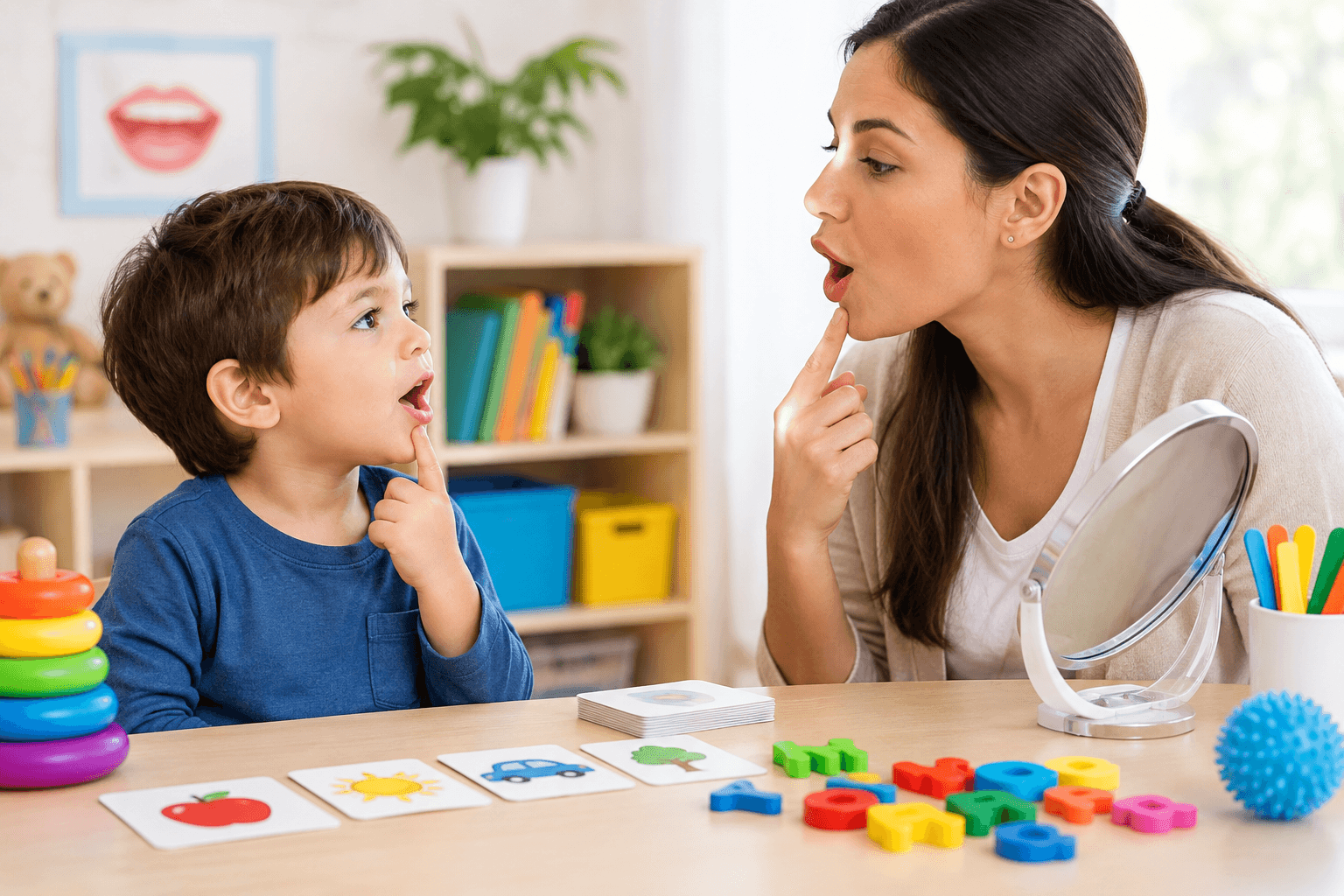
Mirror work. Sit in front of a mirror together and practice tricky sounds like "s," "r," or "th." Watching their own mouth helps the brain map movement to sound.
Cooking together. Following a two-step or three-step instruction builds sequencing, comprehension, and vocabulary all at once.
Speech Therapy Activities for 3 Year Olds at Home
Three-year-olds are still catching up on many sounds, and that is normal. Focus on rhythm and confidence rather than perfect pronunciation. Blowing bubbles builds breath control. Humming favorite tunes activates rhythm centers linked to fluency. Reading rhyming books strengthens the sound-to-meaning connections the brain leans on later for clear speech. Keep sessions to five or ten minutes and stop while it is still fun. Ending on a good note trains the brain to expect success, which lowers anxiety for the next round.
Home Activities for Speech Therapy That Fit Everyday Life
You do not need a dedicated hour to see progress. Speech practice fits into moments you are already living.
At meals, name the foods, describe textures, and ask open questions. In the car, play "I spy" or take turns naming things by category. At bedtime, tell a story together where each person adds one sentence. These moments feel ordinary, and that is exactly why they work. The brain learns best when practice is woven into real life rather than isolated from it.
The neuroscience stuttering approach used at StopStutter builds on this same idea. Rather than treating speech as something to fix in a clinic once a week, it treats speech as a skill the brain refines every day through the right kind of input. That input can be structured, but it should also feel natural and low-pressure so the nervous system stays calm enough to learn.
Home Practice Activities for Speech Therapy
For older children, teens, and adults, home practice can take a more structured shape while still staying gentle on the nervous system. High stress shuts down the very brain regions needed for smooth speech, which is why relaxed, consistent practice beats intense drilling every time.
A simple daily framework looks like this:
Warm up for two minutes. Slow breaths, gentle humming, or reading a sentence out loud at half speed.
Focus practice for five to ten minutes. Pick one target. It might be a sound, a phrase, or a specific breathing pattern before speaking.
Real-world use across the day. Order coffee out loud, read one email aloud, or narrate a household task. Application is where the brain locks in new patterns.
Consistency matters more than duration. Ten minutes a day beats one long weekend session, because the brain needs frequent, repeated signals to rewire.
When to Bring in Expert Support
Home practice supports professional therapy. It does not replace it. If speech is causing frustration, avoidance, or falling far behind expected milestones, a qualified specialist can help you build the right plan. Many programs now offer online sessions, which makes it easier than ever to get expert input without travel or long waiting lists.
If you would like personalized guidance built around the neuroscience method, StopStutter offers a free stuttering consultation where you can talk through your goals and understand which approach fits your situation best. It is a low-pressure starting point for anyone unsure where to begin.
Final Thoughts
Speech therapy at home works when it respects how the brain actually learns. Short sessions, playful repetition, and low-pressure practice give the brain the conditions it needs to build new pathways. Whether you are helping a toddler find their first words, a preschooler smooth out their sounds, or an adult work through stuttering, the same principles apply.
Pick two or three activities from this guide, weave them into your week, and give it time. Progress in speech is rarely loud. It shows up in small, steady wins that add up to something real.
Ready to Put This Into Practice?
Download the app and start practicing today
Reading is the first step. Real progress comes from consistent daily practice. Use StopStutter to build confidence and improve your speech every day.


