


ReviewSeptember 16, 2026
Aphasia
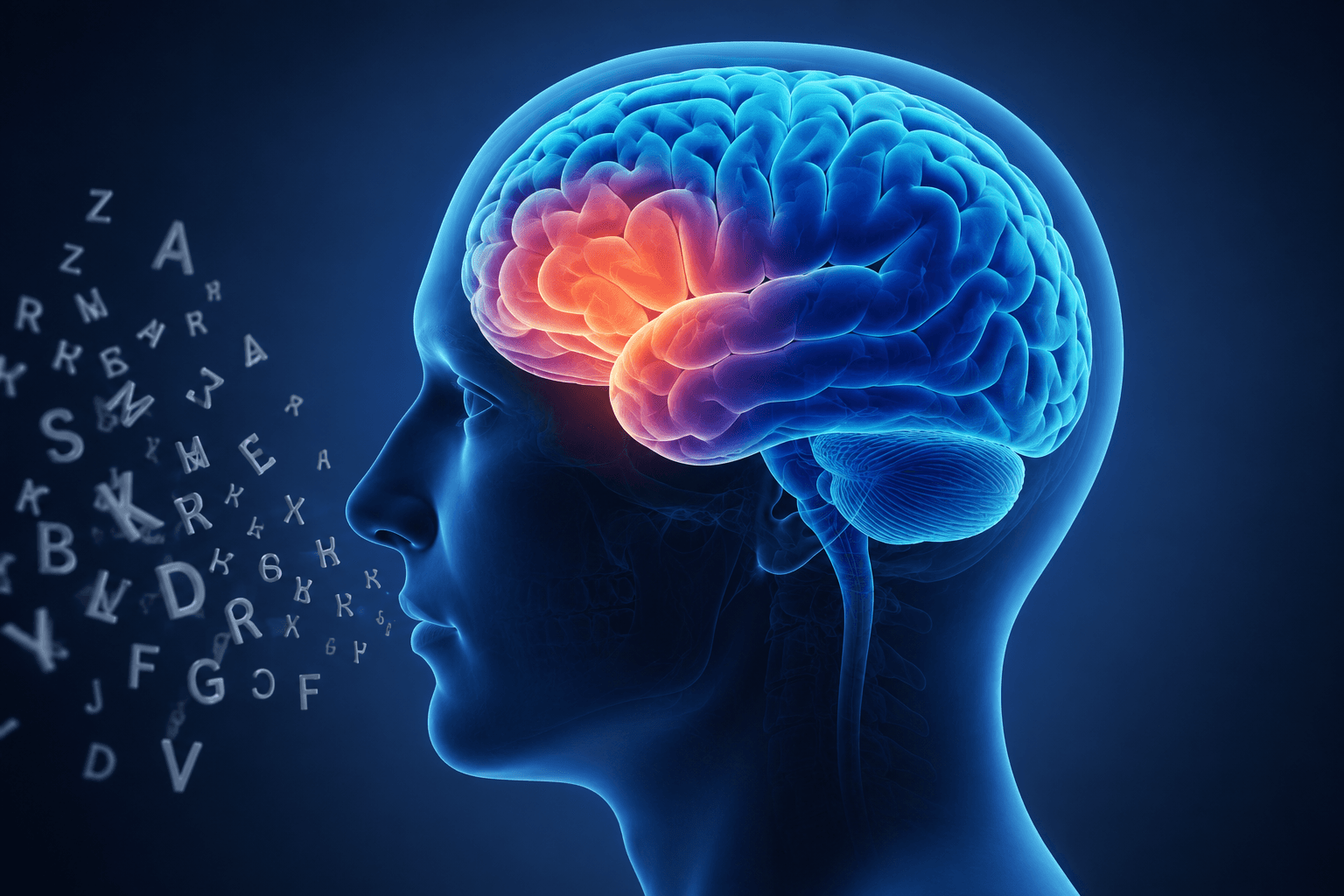
Aphasia is a language disorder that affects how a person speaks, understands, reads, or writes. It doesn't touch intelligence. The mind still works the way it always did. What changes is the bridge between thought and words. Most cases start with a stroke, but brain injuries, tumors, infections, and progressive conditions can trigger it too. Around 2 million people in the US alone live with aphasia, and most families don't hear the word until it lands in their own living room. The encouraging part is that the brain has more capacity to rebuild language than we used to believe, and modern neuroscience is reshaping how recovery is approached. This guide walks through what aphasia actually is, the main types, why it happens, and what recovery really looks like.
Aphasia Meaning and Definition
The word comes from Greek roots meaning "without speech." In practice, it's a bit broader than that:
A disorder of language, not thought
Affects speaking, understanding, reading, and writing, sometimes all at once
Comes from damage to specific language centers in the brain
Varies enormously in severity and pattern
Can be temporary or permanent depending on the cause
If you're trying to make sense of the difference between aphasia and other speech problems that get lumped together, how to stop stuttering covers the flow-based conditions that are commonly confused with aphasia. Both live in the nervous system, both respond to brain-based recovery approaches, but the underlying pattern is different.
What is Aphasia
To understand what makes aphasia distinct:
The person still has thoughts and intentions: What they can't do is translate those into words easily.
It's not a psychological issue: It's neurological, tied to specific brain regions.
Intelligence remains intact: Someone with aphasia can still solve problems, recognize faces, feel emotions, understand context.
Frustration is huge: Knowing what you want to say and not being able to say it takes an enormous emotional toll.
Recovery is possible: How much depends on the cause, the person, and the therapy.
The brain's ability to rewire itself after damage is remarkable, and much of what's now known about that recovery comes from the same body of neuroscience stuttering and language research shaping modern speech pathology. New pathways can form. Old functions can partially return. That principle sits at the core of every effective aphasia recovery plan today.
Types of Aphasia
There are several types, usually grouped by which language function is most affected. The main ones:
Broca's aphasia (expressive aphasia):Speech is halting and effortful. The person knows what they want to say but struggles to get it out. Comprehension is usually preserved.
Wernicke's aphasia (receptive aphasia): Speech flows fluently but often doesn't make sense. Comprehension is impaired. The person may not realize their speech is off.
Global aphasia: Severe impairment across all language areas. Both speaking and understanding are heavily affected.
Anomic aphasia: Trouble finding specific words. Speech is otherwise mostly fluent. Often described as constant "tip of the tongue."
Conduction aphasia: Speech and comprehension are okay, but repeating words is very hard.
Primary progressive aphasia (PPA): Language ability worsens over time, usually part of a neurodegenerative condition.
Transcortical aphasias (motor, sensory, mixed): Similar to Broca's or Wernicke's but with repetition preserved.
If you're navigating recovery for a loved one, structured programs like online stuttering therapy share many neuroplasticity-based principles that apply to aphasia recovery too, since both involve retraining specific neural circuits through calm, consistent practice.
How the Neuroscience Method Applies to Aphasia
Here's where the modern view of aphasia has really shifted. The Neuroscience Method used by the World Stop Stuttering Association is built on one core insight: speech and language patterns are shaped by the brain, and the brain is capable of rebuilding those patterns throughout life. That principle is transforming how aphasia recovery is approached.
Applied to aphasia, this means:
Neuroplasticity is central to recovery: The brain reroutes function around damaged areas when the right kind of practice is done consistently.
Calm, consistent practice beats intense drilling: New neural pathways form best when the nervous system feels safe, not pressured.
Language recovery isn't limited to the first few months: Progress can continue for years with the right approach.
State matters as much as technique: Working with a settled nervous system produces more durable change than pushing through frustration.
The whole brain gets involved in recovery: Undamaged regions can take on functions once handled by the damaged ones.
This is why the neuroscience-based approach WSSA uses for stuttering shares real DNA with modern aphasia rehab. Both are about training the brain to build better speech and language patterns, and both work better when the practice is framed around brain adaptation rather than just muscle drill.
Broca's Aphasia (Expressive Aphasia)
This is the type most people picture when they hear "aphasia." Key features:
Speech is broken, telegraphic ("Walk dog... park...")
Small words like "and," "the," "is" often get dropped
Person is usually aware of the errors, which adds frustration
Comprehension is largely intact, they understand you
Reading and writing are usually affected too
Comes from damage to Broca's area in the frontal lobe, most often after a left-hemisphere stroke
Wernicke's Aphasia (Receptive Aphasia)
The mirror image of Broca's, and often more distressing for family members:
Speech flows easily but is full of made-up words or unrelated ones
Sentences may sound grammatically correct but make no sense
The person often doesn't realize they aren't being understood
Comprehension is impaired, they may not follow what you say
Comes from damage to Wernicke's area in the temporal lobe
The mismatch between what the person thinks they said and what actually came out is one of the hardest parts. Families often need coaching on how to communicate, and support your partner who stutters dos and donts covers similar communication ground that applies here too.
Global Aphasia
The most severe form:
Speech is very limited, sometimes just a few repeated words or sounds
Comprehension is heavily impaired
Reading and writing usually gone
Usually follows a large left-hemisphere stroke
Some improvement is common in the first months, but full recovery is rare
Aphasia Symptoms
Signs vary widely depending on type and severity, but common ones:
Speaking in short, fragmented sentences
Speaking in long sentences that don't make sense
Substituting one word for another (saying "table" when meaning "chair")
Making up words that don't exist
Trouble understanding conversation, especially fast or complex speech
Difficulty reading or writing
Trouble finding the right word ("tip of the tongue" constantly)
Frustration and social withdrawal
Aphasia Causes
Aphasia is a symptom of underlying brain damage. Most common causes:
Stroke: By far the leading cause. About 25 to 40 percent of stroke survivors develop some form of aphasia.
Traumatic brain injury: From accidents, falls, or assaults.
Brain tumors: Depending on location.
Brain infections: Encephalitis, meningitis, abscesses.
Neurodegenerative diseases: Alzheimer's, frontotemporal dementia, primary progressive aphasia.
Seizures: Usually temporary aphasia during or right after.
Migraines: Some migraine variants cause brief aphasic episodes.
Aphasia ICD 10 Codes
For medical documentation and insurance purposes:
R47.01: Aphasia (the main code)
I69.320: Aphasia following cerebral infarction (post-stroke)
F80.1: Expressive language disorder (used less commonly)
G31.01: Pick's disease (associated with progressive aphasia)
Aphasia Treatment
Recovery isn't a straight line, but real progress is possible. Standard approaches:
Speech-language therapy: The foundation. A speech-language pathologist works on speaking, understanding, reading, writing, or all four depending on the type.
Melodic Intonation Therapy: Uses singing and melody to bypass damaged language areas. Especially useful for Broca's aphasia.
Constraint-induced language therapy: Forces the person to use spoken language rather than gestures, similar to the approach used in stroke rehab for arms and legs.
Group therapy: Practicing in real conversations with peers who understand.
Family training: Teaching loved ones how to make communication easier.
Brain-based practice principles: Working in a calm, focused state so new neural pathways take hold properly.
Technology tools: Apps, tablets, communication boards for severe cases.
VNeST (Verb Network Strengthening Treatment): A newer approach focused on sentence-level improvement.
If you're weighing therapy options and cost is a concern, how much does speech therapy cost walks through what to expect, and insurance coverage for speech therapy covers what most plans include.
Primary Progressive Aphasia (PPA)
This one deserves its own note because it's different from stroke-related aphasia:
Language ability slowly worsens over years
Usually starts in the 50s or 60s
Part of the frontotemporal dementia family in many cases
Three main variants: nonfluent, semantic, and logopenic
Treatment focuses on maintaining function and communication strategies rather than full recovery
Even here, brain-based practice makes a real difference. Consistent language work slows decline and keeps communication going longer than it otherwise would.
Aphasia and Stroke
Since stroke is the top cause, some specific patterns worth knowing:
Aphasia often appears immediately after the stroke
The first 3 to 6 months typically see the fastest recovery
Continued gains are common past that, just slower
Intensive early therapy makes a big difference
Left hemisphere strokes are most likely to cause aphasia in right-handed people
Some people recover fully, most see significant improvement, some retain lasting effects
The emotional toll shouldn't be underestimated. Depression is common after aphasia diagnosis. How stuttering affects confidence and how to rebuild it touches on similar emotional territory, since losing your ability to communicate affects identity in profound ways.
Aphasia vs Dysphasia vs Dysarthria
These get mixed up all the time:
Aphasia: Language problem. Can't find words, understand, or form sentences.
Dysphasia: Essentially the same as aphasia. Older term used less now.
Dysarthria: Motor speech problem. Person knows the words but can't move mouth muscles well enough to say them clearly.
A stroke can cause any combination of these.
Frequently Asked Questions
How long does aphasia last?
It depends on the cause. Stroke-related aphasia often improves significantly in the first 6 months with therapy, and can continue improving for years with brain-based practice. Progressive aphasia from neurodegenerative disease tends to worsen over time.
What is the main cause of aphasia?
Stroke is the number one cause, accounting for most cases. Other causes include traumatic brain injury, brain tumors, infections, and neurodegenerative diseases like frontotemporal dementia.
Can a person with aphasia live a normal life?
Many people with aphasia live full, engaged lives, especially with therapy, family support, and communication tools. Adaptation takes time, but daily life, relationships, and even work are all possible for most.
Can people with aphasia understand?
It depends on the type. People with Broca's aphasia usually understand well. Those with Wernicke's or global aphasia have significant comprehension challenges. Speaking slowly, using short sentences, and adding gestures helps.
Final Thoughts
Aphasia is one of the most misunderstood conditions in medicine because from the outside it can look like confusion, low intelligence, or emotional distress. It's none of those. It's a specific injury to the language centers of a brain that still holds all the same knowledge, feelings, and personality it did before. The same neuroscience-based principles WSSA uses to help stutterers retrain their speech apply to aphasia recovery too. The brain shapes the pattern, calm consistent practice rebuilds it, and meaningful recovery is possible for far more people than the traditional view suggests. If someone you love has been recently diagnosed with aphasia, connect with a speech-language pathologist as early as possible, commit to daily practice, and give the brain the time it needs to rebuild what it can.
Ready to Put This Into Practice?
Download the app and start practicing today
Reading is the first step. Real progress comes from consistent daily practice. Use StopStutter to build confidence and improve your speech every day.


