ReviewOctober 15, 2026
Barriers to Communication
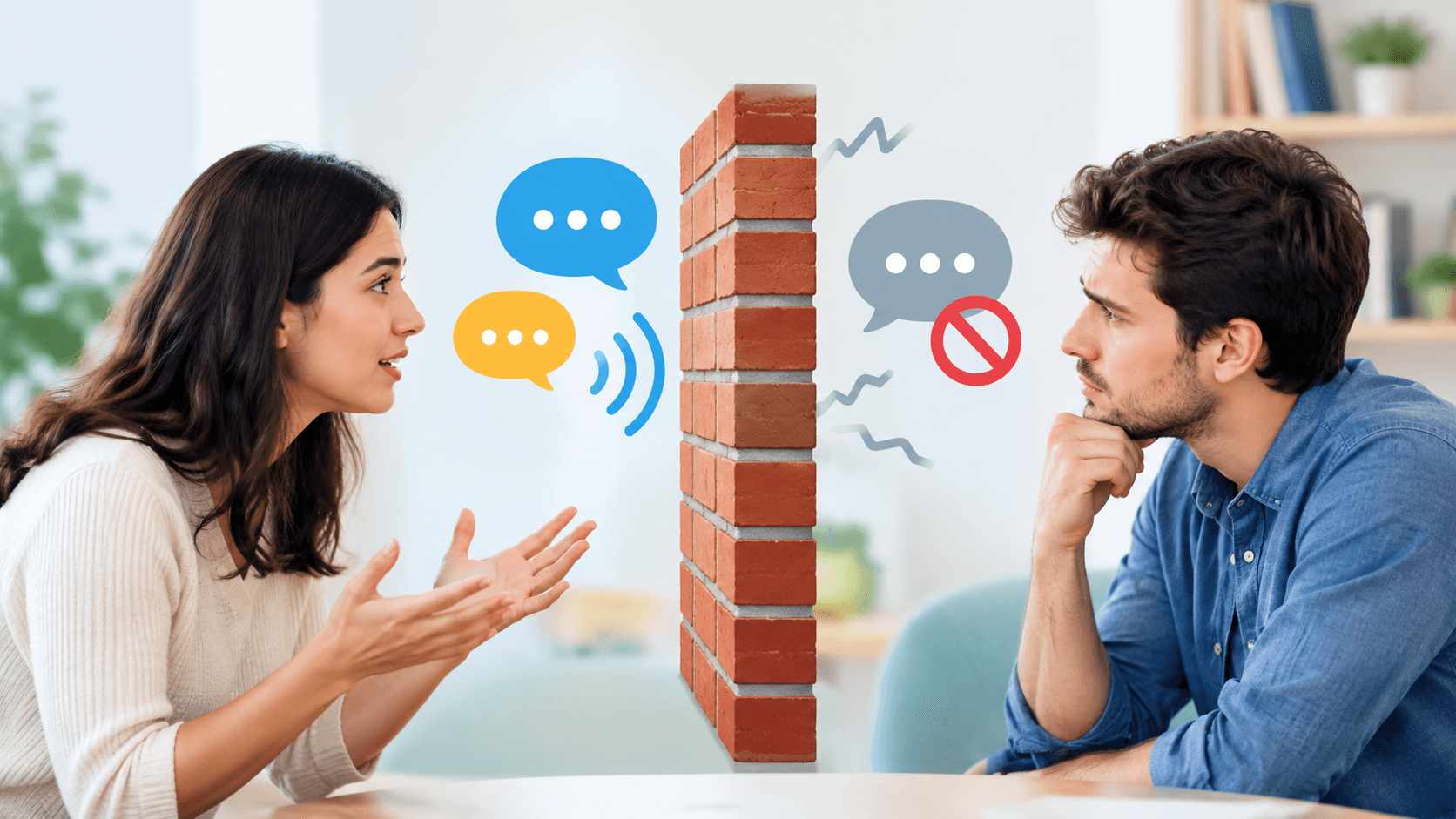
Barriers to communication are anything that stops a message from being sent, received or understood the way the speaker meant it. They can be a noisy room, a nervous mind, a word the listener has never heard, or the fear of tripping over a sound. The encouraging part is that most barriers can be named and worked on, and how to stop stuttering is a great place to begin if speech is where yours show up.
Most of us assume talking is simple. You say a thing, the other person hears it, and everyone moves on. Real conversations are messier than that. A tired listener drifts away, a stressed speaker rushes, and a joke that works in one city falls flat in another. Those small gaps pile up into confusion, hurt feelings and missed chances.
In this guide you’ll find the main types of barriers, everyday examples from work and home, and a closer look at what they feel like for someone who stutters. You’ll also get habits to try today, plus a note on online stuttering therapy for anyone who wants guided help from people who have been through it themselves.
Barriers to Communication Explained in Plain English
If someone asked you to explain barriers to communication in a single line, you could say they are the blockers standing between what you mean and what the other person understands. Think of communication as a loop made of a sender, a message, a channel, a receiver and feedback. A barrier can break that loop at any point. Sometimes the problem sits with the speaker, sometimes with the listener, and quite often it comes from the setting around them.
Here’s the part people tend to miss. Most barriers aren’t fixed traits. They’re habits, moods or conditions, which means they can change once you notice them. A person who freezes in meetings isn’t “bad at communication.” They’re usually dealing with one specific barrier that nobody has looked at properly yet.
Barriers of Communication and Examples You Meet Every Day
Let’s see how these show up in ordinary life. Most fall into a handful of groups, and you’ve probably run into every one of them before.
Physical Barriers
These come from the environment. A busy café, a bad phone line, a lagging video call or even a big desk between two people can weaken a message before a single word registers.
Emotional and Psychological Barriers
Fear, stress, shyness, anger and low confidence change how we speak and how we listen. A nervous employee might stay silent in a meeting even when they hold the best idea in the room.
Language and Cultural Barriers
Jargon, slang, strong accents and different customs can confuse people who share the same room. In some cultures eye contact shows respect, in others it feels rude, so one gesture can send two opposite messages.
Barriers in Communication With Examples From Work and Home
Noise and distractions: A manager explains a new process while the team scrolls through their phones, so half the details vanish and the same questions come back an hour later.
Assumptions: A friend says “I’m fine” in a flat voice, the listener takes it at face value, and a real problem stays hidden for weeks.
Information overload: A long email with ten requests and three deadlines buries the one task that matters, and the reader replies to the wrong thing.
Poor listening: One person waits for their turn to talk instead of hearing the point, which leaves the speaker feeling brushed off and less likely to share next time.
Status gaps: A junior colleague notices a mistake but keeps quiet because speaking up to a senior feels risky, and the error travels all the way to the client.
Barriers of Effective Communication for People Who Stutter
For someone who stutters, the usual barriers come with an extra layer. Speech can feel unpredictable, so the mind starts guarding against it. Over time, that guarding often becomes a bigger obstacle than the stutter itself. This is where lived experience matters. StopStutter is built around the Neuroscience Method® by Lee Lovett, and its certified stuttering specialists are former stutterers who understand these barriers first hand. The site reports 300+ stopped stuttering stories and measurable OASES score improvements for 95% of its therapy clients.
The Fear That Builds Before You Speak
Many people scan a sentence ahead, spot a hard sound and panic. The tension that follows tightens the throat and often makes the block worse. These patterns are explained clearly in our guide to the core behaviors of stuttering.
Word Swapping and Silence
Some people swap words, skip phone calls or stay quiet to avoid a stumble. It protects them in the moment but slowly shrinks their world. If you’ve ever wondered whether this means something is permanently wrong, is stuttering a handicap gives a calm and honest answer.
Listener Reactions That Add Pressure
A rushed “just relax” or a finished sentence adds weight, even when it’s kindly meant. Parents often ask about this early on, and the post on 2 year old stuttering shows how patient, gentle responses protect a child’s confidence.
Simple Ways to Overcome a Barrier in Communication
Fixing barriers doesn’t call for big gestures. Small habits, repeated often, do most of the work.
Slow Down and Check Understanding
Speak a little slower than feels natural and ask “does that make sense?” after key points. Speed is a hidden barrier. Our article on the top 7 stuttering therapy techniques shows how pacing and easy starts can calm a rushing voice.
Build Clarity and Confidence
Short sentences, familiar words and one idea at a time make you easier to follow. Read how to speak clearly for simple drills, and try public speaking anxiety tips if nerves hit hardest in front of a group. For everyday chats, communication confidence for stutterers is a friendly next read.
Listen fully before replying: Put the phone down, look at the person and repeat back what you heard in your own words. It takes about ten seconds and clears up most misunderstandings before they grow.
Match the channel to the message: Share quick updates in chat, but talk through sensitive topics on a call or in person, where tone is easy to hear and feedback comes straight away.
Practise in low-pressure settings: Begin with a friend, a mirror or a supportive speech club, then move to harder situations step by step so your confidence grows from real evidence.
Ask for honest feedback: A trusted colleague can tell you whether you come across as rushed, unclear or distant. Most people are glad to help when you ask kindly.
Frequently Asked Questions
What are the main barriers to communication?
Most people group them into physical, emotional, language and cultural, and perceptual barriers. Physical covers noise and distance, while emotional covers fear, stress and anger. Perceptual barriers come from assumptions we make about the other person.
Can stuttering be a barrier to effective communication?
It can, mostly because of the fear and avoidance that grow around it, not the stutter alone. People may skip calls or swap words to stay safe, which limits their voice. With the right training and support, many learn to speak with far more ease.
How do I start overcoming a barrier in communication?
Name the one barrier that hurts most, whether it’s noise, nerves or unclear wording. Then practise one small fix daily, such as slowing down or repeating back what you heard. If speech is the sticking point, a free evaluation with a specialist is a calm way to begin.
Why Lasting Change Starts in the Brain
Willpower alone rarely changes speech, because fear and habit live deep in the nervous system. The neuroscience method works on both the habit layer and the mental side, so speaking starts to feel safe instead of risky. Daily practice, a warm community and coaching from people who have walked the same road help new patterns stick. Progress usually comes in small, steady steps, and that’s completely normal.
Moving Past Barriers to Communication One Step at a Time
Barriers to communication are real, but none of them is permanent. Every clear conversation you have teaches your mind that speaking is safer than it feels. Start with one change this week, whether that’s slowing down, listening fully or asking for feedback. If stuttering is part of your story, you don’t need to work it out alone. Book a free consultation and take the first step toward conversations that feel open, calm and your own.
Ready to Put This Into Practice?
Download the app and start practicing today
Reading is the first step. Real progress comes from consistent daily practice. Use StopStutter to build confidence and improve your speech every day.