


ReviewSeptember 17, 2026
Building an Articulation Starter Kit
If you've spent even a week helping a child practice their /r/ sounds or worked through a speech therapy homework log with a client, you already know the truth: most homework packets end up crumpled at the bottom of a backpack. The flashcards get lost. The calendar gets forgotten by Wednesday. By the time the next session rolls around, everyone feels like they're starting over.
That's not a parent problem. It's not a kid problem. It's a design problem one the field is finally starting to solve by borrowing from brain science.
Whether you're a parent hunting for articulation resources for the first time or a caregiver researching how to stop stuttering for a family member, the underlying question is the same: what actually makes speech practice work between sessions? Homework isn't magic. But when it's structured around the way the brain genuinely learns motor patterns, small daily practice adds up faster than most people expect.
The shift toward online stuttering therapy and remote articulation work has pushed clinicians to rethink homework from the ground up. A digital-first approach means the "homework" doesn't sit in a folder it lives in short daily bursts, tied to real speech situations, guided by how habit formation actually happens in the brain. That change matters whether you're assembling your first articulation starter kit or refining one you've used for years.
Why Traditional Speech Therapy Homework Doesn't Stick
Walk into most SLP offices and you'll find a stack of speech therapy homework sheets pages of target words, sentences, and a signature line for a parent. It's not that these don't work. It's that they're built on a shaky assumption: that repetition alone rewires speech.
It doesn't. Not on its own.
The brain doesn't just need reps. It needs meaningful, spaced, feedback-rich practice the kind neural pathways respond to. A speech therapy homework log full of ticked boxes tells you the child did the practice. It doesn't tell you whether the practice built any new circuitry.
What Belongs in an Articulation Starter Kit
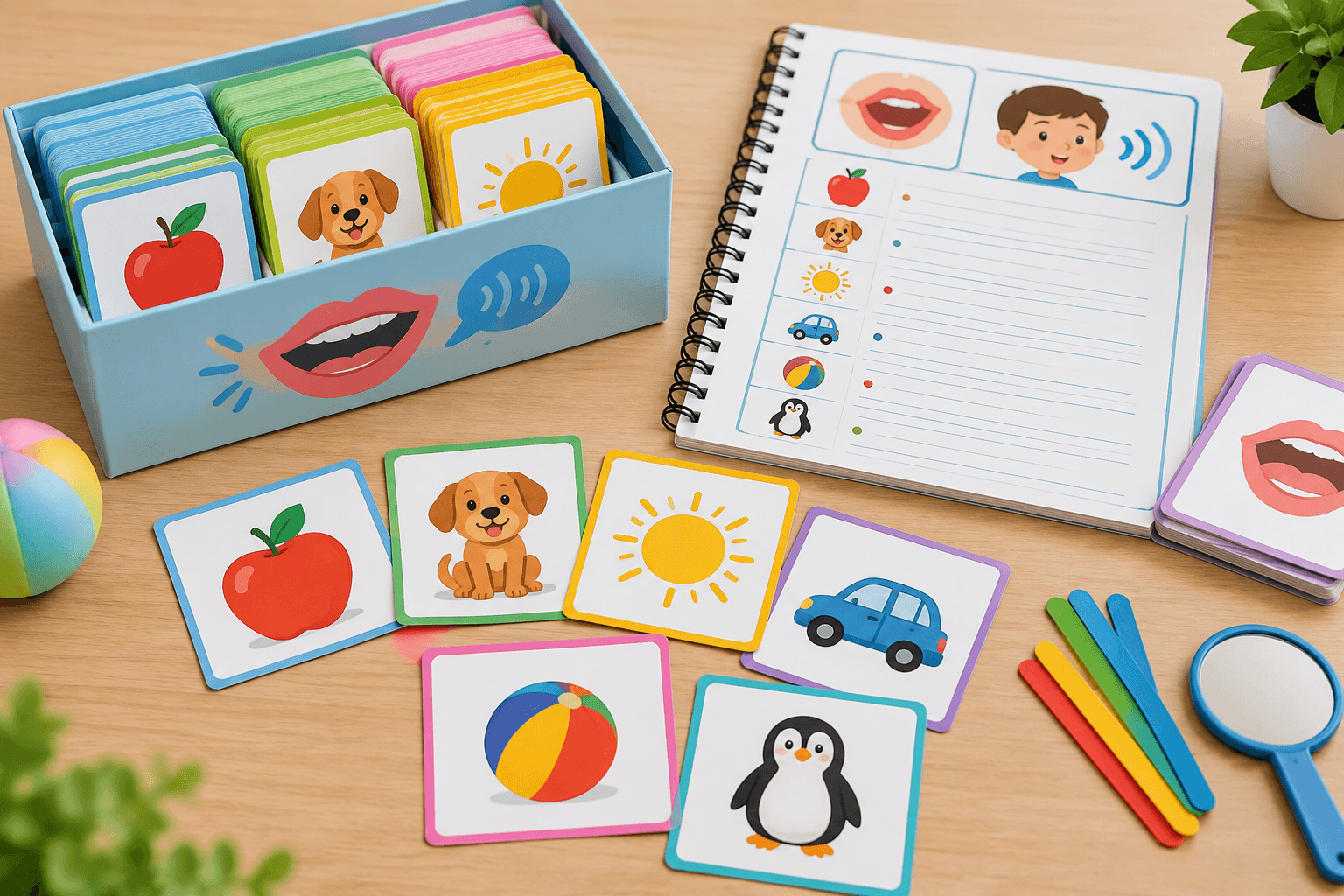
Before we get to the science, let's talk practical layers. A solid articulation starter kit the physical or digital resources you hand a family usually includes:
Articulation cards organized by sound position (initial, medial, final) and complexity (words, phrases, sentences, stories)
A speech therapy homework calendar that maps daily practice slots, not just weekly targets
A speech therapy homework chart with visible progress markers the child can see and celebrate
Speech therapy homework template pages that adapt to the child's current level rather than one-size-fits-all worksheets
Ideas for play based speech therapy homework games, scavenger hunts, story prompts
Guidance for speech therapy summer homework packets so progress doesn't slide during breaks
That's the toolkit. But a toolkit is only as strong as the method sitting behind it.
The Neuroscience Method: Why the Brain Rewrites Faster With the Right Practice
Here's where things get interesting. Modern speech science has moved a long way from "just practice more." Research on neuroplasticity the brain's ability to form new pathways shows that speech patterns aren't just habits of the mouth. They're patterns of neural firing, laid down through experience and reinforced by every attempt.
That's why the neuroscience stuttering approach is quietly changing what "homework" even means. Instead of grinding through word lists, the method uses short, intentional practice sessions built around three principles the brain actually responds to:
Salience practice tied to real, meaningful moments (ordering food, greeting a friend, reading aloud to a pet) rather than isolated word drills
Spacing several tiny practice windows across the day rather than one long session
Feedback loops immediate cues that let the speaker feel what worked, not just hear whether they got it "right"
Apply those three principles to articulation homework and something shifts. A child practicing /s/ in five short bursts across a day while brushing teeth, walking to the car, before bed builds motor memory faster than one 20-minute worksheet grind. The neuroscience is the same whether the target is a lisp, a substitution, or a stutter.
A Speech Therapy Homework Template That Actually Works
Instead of a single sheet, structure the week like this:
Monday–Friday micro-sessions (5 minutes each):
Morning: 10 target words in natural context (brushing teeth, breakfast chatter)
Afternoon: 5 sentences during a preferred activity (drawing, LEGO, cooking)
Evening: 3 conversational turns using the target sound with a family member
Weekend integration:
One "speech scavenger hunt" find and name 10 objects with the target sound
One story-based practice read a favorite book and pause on target-sound words
This structure slots neatly into a speech therapy homework calendar without becoming a chore. It replaces the traditional homework sheet with something the brain actually uses.
Play-Based Speech Therapy Homework: Why Fun Isn't Optional
Kids don't remember drills. They remember games. Play based speech therapy homework isn't a soft option it's neurologically stronger practice, because emotional engagement triggers the neurochemicals (dopamine, norepinephrine) that help the brain consolidate learning.
A few play-based ideas that work with almost any articulation starter kit:
Card flip races turn articulation cards into a memory-match or "go fish" game
Sound scavenger hunts hunt for objects containing the target sound around the house
Puppet shows have the child voice a character who "practices" the sound with them
Silly sentences build the most absurd sentence possible using target words
You're not lowering the bar. You're raising engagement, which raises retention.
Speech Therapy Summer Homework Packets Without the Backslide
Summer is where progress dies. Six to eight weeks away from formal sessions can undo months of work. But summer packets built the traditional way a stack of worksheets to complete "whenever" rarely get touched.
The brain-informed alternative: swap the packet for a daily 5-minute anchor. Tie the practice to one already-existing daily habit (breakfast, brushing teeth, bedtime story). The habit anchor does the remembering. The brain does the rewiring.
Pair that with a simple speech therapy homework chart the child fills in themselves a sticker, a checkmark, a colored square and you've got a summer plan that survives family trips, camp weeks, and lazy mornings.
Bringing It All Together
An articulation starter kit is only the beginning. The cards, the calendar, the log, the template none of it matters if the practice underneath is built on outdated assumptions about how speech is learned.
Spaced, salient, feedback-rich practice works for articulation the same way it works for fluency. The brain doesn't discriminate between speech challenges when it comes to how it forms new pathways. What it responds to is how the practice is designed.
If you're a parent, therapist, or adult working through a speech concern and you want to see what a brain-based practice structure actually looks like in action, a free stuttering consultation is a good place to start. Whether the goal is clearer articulation, smoother fluency, or a mix of both, the underlying principle stays the same: give the brain what it actually needs, and the speech follows.
Ready to Put This Into Practice?
Download the app and start practicing today
Reading is the first step. Real progress comes from consistent daily practice. Use StopStutter to build confidence and improve your speech every day.


