


ReviewSeptember 21, 2026
Child Speech Development
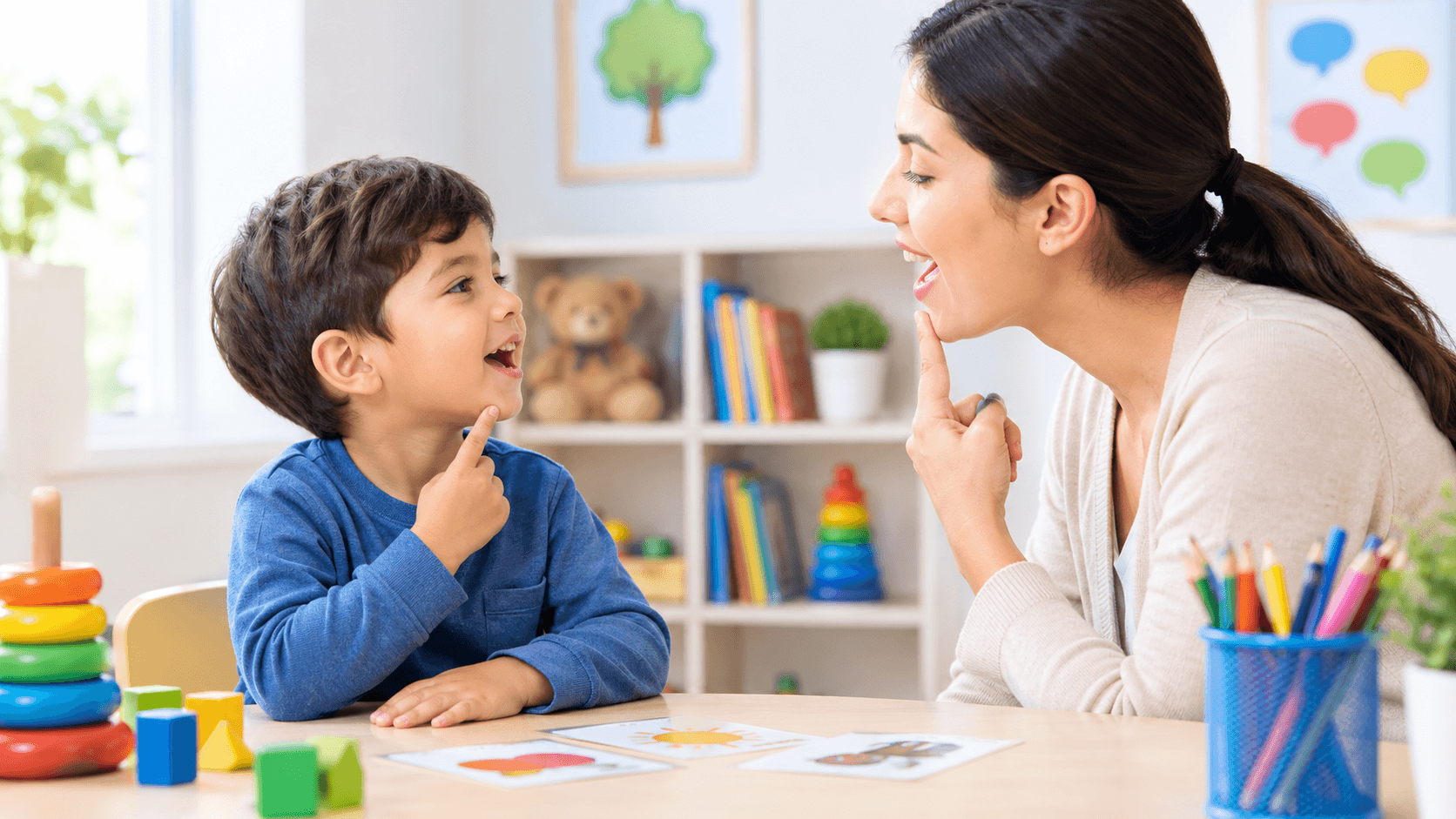
Child speech development is the natural, step-by-step process through which a child learns to understand language and use their voice to communicate with the world around them. It starts with simple coos and babbles in the first few months of life and gradually builds into full sentences, clear pronunciation, and confident conversation by the time a child starts school. Parents often notice this journey unfolding in real time, and every stumble, repeated word, or mispronounced sound is usually just part of a normal learning curve rather than a cause for alarm. If you ever want a deeper look at how speech patterns evolve and what happens when fluency doesn't develop as expected, How to stop stuttering is a good place to understand the bigger picture.
Watching a child move from single words to full sentences is genuinely one of the most rewarding parts of early parenting. Speech and language specialists agree that this growth happens in overlapping stages, and no two children hit every milestone on the exact same day. Some toddlers are chatty by eighteen months, while others take a little longer to warm up to talking, and both can be perfectly typical. What matters more than the calendar date is the overall trend: is your child understanding more, attempting more sounds, and trying to connect with people through language, even imperfectly?
That said, there is a difference between the normal bumps of learning to talk and patterns that genuinely need professional attention. If your child is repeating sounds, stretching words, or getting physically stuck while trying to speak for more than six months, it is worth exploring options like online stuttering therapy, especially one built around techniques designed specifically for younger speakers. Catching these patterns early tends to make a real difference in how a child grows into their voice.
Understanding a Child's Speech and Language Development
A child's speech and language development is really two skills growing side by side. Language is the ability to understand and use words to express ideas, while speech is the physical act of producing sounds clearly. A child can understand far more than they can say, which is why toddlers often follow instructions long before they can string sentences together.
Receptive Language vs Expressive Language
Receptive language is what your child understands when you talk to them, like following simple directions or pointing to a named object. Expressive language is what they can actually say or communicate back. Delays can show up in either area, and a pediatric speech-language pathologist is trained to tell the difference.
Common Myths Parents Believe
Many parents worry unnecessarily because of outdated ideas passed down through family or old parenting books. A few of the most common misconceptions include:
Believing that boys always talk later than girls, when in reality the range of normal development overlaps heavily between genders and individual variation matters far more than sex.
Assuming that a bilingual household causes speech delays, when research consistently shows that learning two languages does not cause disorders, though it may temporarily mix vocabulary across languages.
Thinking that a child will simply "grow out of" every speech difference on their own, when some patterns, especially disfluencies that last well beyond the toddler years, genuinely benefit from early guidance.
Expecting perfect pronunciation by age three, when several sounds like "r," "l," and "th" are developmentally appropriate to still be forming well into early elementary school.
Child Speech Development Stages
Understanding child speech development stages gives parents a realistic framework for what to expect, without turning every quiet week into a source of worry.
Birth to 12 Months
During this stage, babies communicate through crying, cooing, and eventually babbling strings of sounds like "ba-ba" or "da-da." By their first birthday, most infants can say one or two simple words and respond to their own name.
1 to 2 Years
Vocabulary tends to explode during this window, often referred to as the "word spurt." A child may go from a handful of words to fifty or more, and they typically begin combining two words together, such as "more milk" or "go car."
2 to 3 Years
Sentences start forming, usually three to four words long, and strangers can generally understand about half of what a two-year-old says. This is also the stage where normal disfluency, like repeating a word or a sound once or twice, becomes more noticeable simply because children are trying to express bigger, more complex thoughts.
3 to 5 Years
By preschool age, most children speak in full grammatically correct sentences and can be understood by unfamiliar listeners nearly all the time. This is also the age range where true stuttering, if it is going to appear, most commonly begins. Parents raising a young child around this age who notices tension, blocks, or frequent repetitions may find it helpful to read through a breakdown of what to watch for in a 2-year-old stuttering episode.
Supporting Speech Growth at Home
Parents play a bigger role in a child's speech journey than most people realize. Everyday interactions build the foundation for confident communication far more than any single program or app ever could.
Narrate your day out loud in simple language, describing what you are doing while cooking, driving, or folding laundry, since hearing a steady stream of natural speech builds vocabulary passively.
Read aloud together every single day, pausing to ask open-ended questions like "what do you think happens next" instead of only pointing at pictures and naming them.
Slow down your own speaking pace when talking with your child, since a relaxed rhythm models fluency and reduces pressure to respond quickly.
Avoid finishing your child's sentences or correcting every small stumble in the moment, because constant interruption can actually increase self-consciousness around talking.
Celebrate attempts, not just perfect words, so your child associates talking with warmth and encouragement rather than performance pressure.
If disfluencies do stick around past the preschool years, exploring proven approaches early tends to help. A helpful starting point is a rundown of stuttering therapy techniques that actually work, several of which have been adapted specifically for younger children in family-friendly formats.
It's worth understanding why some approaches succeed where traditional speech therapy alone sometimes falls short. The neuroscience method focuses on retraining the brain's speech pathways using neuroplasticity principles, helping a child replace hesitant speech patterns with new, fluent ones rather than simply managing symptoms. This approach pairs well with traditional speech-language support, giving families a more complete picture of how fluency actually forms in the brain over time.
Frequently Asked Questions
At what age should I be concerned about my child's speech?
Most children should be mostly understood by strangers by age three and speaking in full sentences by age four. If your child isn't hitting these general markers, or if repetitions and blocks last longer than six months, a professional evaluation is a reasonable next step.
Is it normal for toddlers to repeat words while talking?
Yes. Between ages two and four, mild repetition is common as children learn to organize bigger thoughts into speech. It only becomes a concern when repetitions are frequent, involve visible tension, or last for more than six to twelve months.
Can speech delays be outgrown without help?
Some mild delays resolve on their own, but persistent patterns, especially stuttering that continues past age five, rarely disappear without support. Early intervention consistently leads to better long-term outcomes.
Does screen time affect speech development?
Excessive passive screen time can reduce the back-and-forth conversation children need to build language skills. Interactive talk time with a real person remains the strongest driver of healthy speech growth.
How is stuttering in children different from normal disfluency?
Normal disfluency is relaxed and occasional. Stuttering often includes visible physical tension, sound prolongations, or complete blocks where no sound comes out at all, and it tends to be more consistent across different situations.
Give Your Child the Best Start With Confident Communication
Child speech development is not a race, and every child moves through these milestones at their own pace, shaped by temperament, environment, and everyday encouragement from the people around them. What matters most is staying attentive, celebrating progress, and knowing when a pattern has moved from typical to something worth a closer look. Parents who catch persistent disfluency early and pair it with the right guidance tend to see their children grow into far more confident speakers. If you have concerns about your child's speech and want a professional opinion, booking a free consultation is a simple first step toward clarity and peace of mind.
Ready to Put This Into Practice?
Download the app and start practicing today
Reading is the first step. Real progress comes from consistent daily practice. Use StopStutter to build confidence and improve your speech every day.


