ReviewOctober 12, 2026
Do Pacifiers Cause Speech Delays
If you’re a parent, you’ve probably had this moment. Your toddler is happily sucking on a pacifier, and someone (a relative, a stranger at the park, a late-night Google search) makes you wonder: am I hurting my child’s speech?
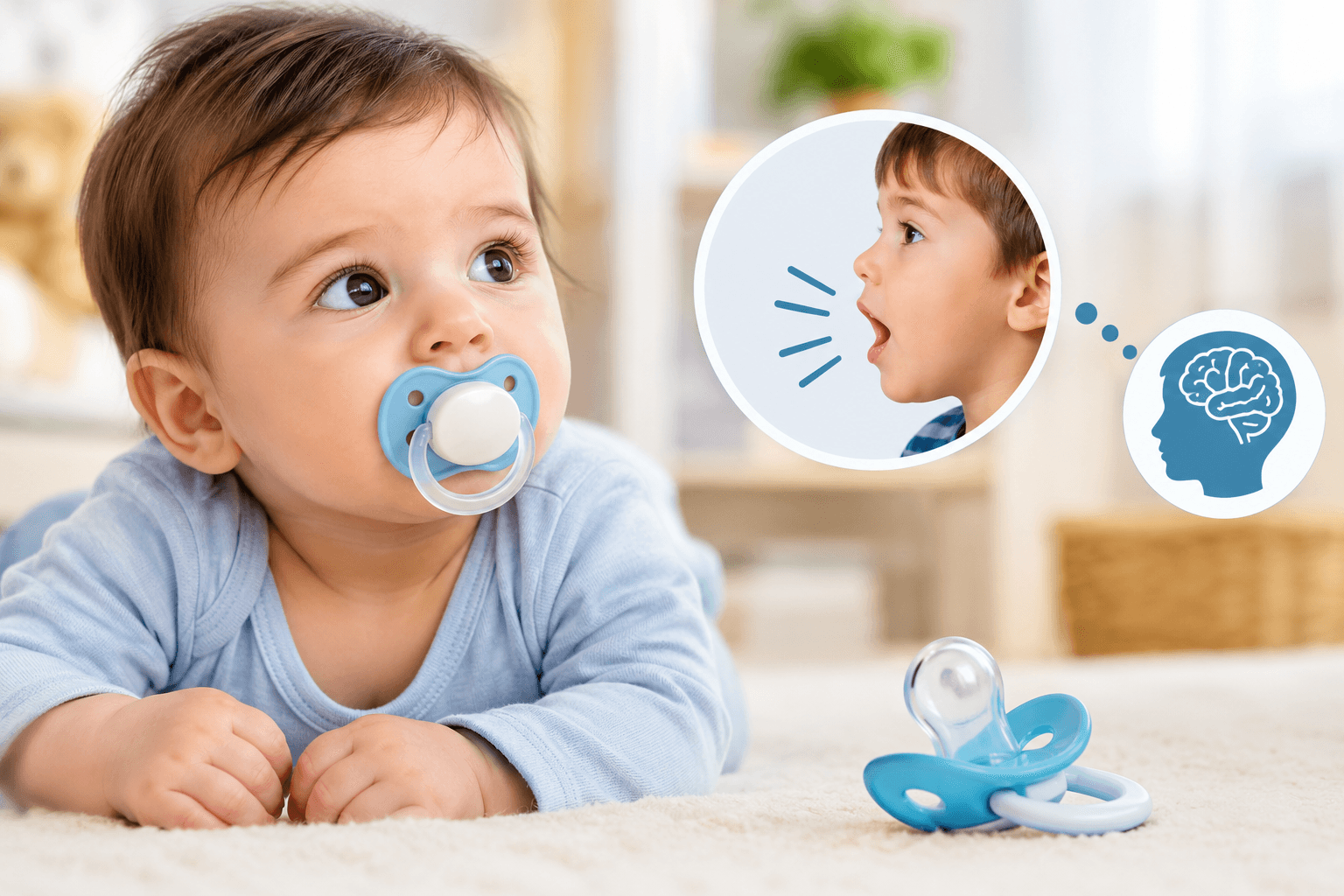
So, do pacifiers cause speech delays? The honest answer is “not on their own, but heavy, prolonged use can get in the way.” That’s a lot less scary than the headlines, and a lot more useful. Let’s look at what’s really going on inside a child’s developing brain.
Before we dive in, one quick note. Speech delay and stuttering are two different things, and parents often mix them up. If your child’s real concern is repeating sounds, getting stuck on words, or struggling to get speech out, that’s a fluency issue, and our guide on How to stop stuttering is a better starting point than anything about pacifiers.
Why This Question Worries So Many Parents
Pacifiers sit in a strange spot. They soothe babies, help many families get through nights, and the American Academy of Pediatrics has noted that offering one at sleep time is linked to a lower risk of SIDS. At the same time, speech therapists regularly ask about pacifier habits during evaluations. That mixed message leaves parents confused.
Here’s the thing. A pacifier isn’t magic and it isn’t poison. What matters is how often, how long, and when it’s in your child’s mouth. And if your little one is already showing signs of a speech or fluency concern, working with a specialist through online stuttering therapy can give you answers far faster than guessing at habits.
How Speech Develops in the Brain (The Short Version)
Speech isn’t something kids simply “pick up.” It’s built, repetition by repetition, through a loop between the ears, the mouth, and the brain.
When a baby babbles, they’re running a rehearsal. The motor cortex sends signals to the lips, tongue, and jaw. The ears hear the result. The auditory cortex compares what came out with what they’ve heard from you. Then the brain adjusts. This is called an auditory-motor feedback loop, and it’s one of the core engines of language learning.
Every “ba-ba,” “da-da,” and silly raspberry strengthens these connections. In the first few years of life, the brain is wiring itself at a ridiculous pace, forming millions of new connections every second. That’s why early experience matters so much, and why practice time with the mouth, tongue, and voice isn’t something to take lightly.
So Where Do Pacifiers Come In?
Think of it as a simple matter of “mouth real estate.”
A pacifier occupies the mouth. While it’s in, the tongue can’t move freely, the lips can’t shape sounds, and a child can’t babble or practice words. For a few minutes of soothing, no problem. But if a pacifier is in your toddler’s mouth for much of the day, those practice reps quietly disappear.
It also changes how adults respond. Kids with a pacifier tend to communicate with pointing, sounds, and gestures, and a parent may fill in the gaps without realizing it. Fewer back-and-forth “conversations” means fewer chances for the brain to strengthen language pathways.
So when people ask, do pacifiers cause speech delay, the more accurate framing is this: pacifiers don’t damage the brain, but constant use can reduce the practice time a developing brain needs.
What the Research Actually Shows
The research here is genuinely mixed, and it’s worth being straight about that.
Some studies have linked prolonged pacifier use (especially well past age two or three) with a higher chance of speech sound errors, along with changes in how the teeth and bite develop. Other studies find little or no direct link when pacifier use is limited to sleep and comfort. Differences in how researchers measure “heavy use” make it hard to draw one clean line.
What most speech-language professionals agree on:
Occasional use for sleep and soothing is very unlikely to cause a speech delay.
All-day use, including while the child is awake, playing, and trying to talk, is where concerns begin.
Use that continues well beyond the toddler years deserves a closer look.
Pacifier habits are rarely the only factor. Hearing, genetics, and the home language environment matter a lot.
That last point is key. If a child has a speech delay and uses a pacifier a lot, the pacifier gets blamed, but it may just be one piece of a bigger picture.
The Ear Infection Connection
There’s another route worth knowing about. Some research connects frequent pacifier use with more middle ear infections. Why does that matter for speech? Because the brain learns language through clear sound input. If a child’s hearing is muffled by fluid or repeated infections during critical stretches of development, the auditory cortex gets a blurrier signal to learn from.
So if your child has had lots of ear infections and seems slow to talk, a hearing check should be one of your first steps, before you worry about the pacifier at all.
Does a Pacifier Cause Stuttering?
This one comes up a lot, so let’s clear it up.
There’s no solid evidence that pacifiers cause stuttering. Stuttering is a difference in how the brain coordinates the timing and sequencing of speech movements. Research points to differences in networks connecting the basal ganglia, thalamus, and speech motor areas of the cortex, the very circuits that act like a metronome for fluent speech. It tends to run in families and often shows up between ages two and five, right when language is exploding, which is exactly when pacifier habits are also common. Two things happening at the same age doesn’t mean one caused the other.
If you’re unsure whether what you’re hearing is typical toddler disfluency or something more, you don’t have to figure it out alone. You can book a free stuttering consultation and talk it through with someone who works with this every day.
Signs Your Child’s Speech Might Need Attention
Speech develops on a range, so a late talker isn’t automatically a worry. Still, a few signals are worth acting on:
Few or no babbling sounds by around 12 months
No real words by 16 to 18 months
Fewer than about 50 words, or no two-word combinations, by age two
Speech that’s very hard for family members to understand after age three
Frustration, tantrums, or withdrawal when trying to communicate
Obvious repeating, prolonging, or getting stuck on sounds
None of these automatically point to the pacifier. But they do tell you it’s time to ask a professional, regardless of the cause.
How to Cut Back on Pacifier Use Without a Meltdown
If you’ve decided it’s time to ease off, good news: you don’t have to go cold turkey, and you don’t have to feel guilty about the past. A few gentle approaches tend to work:
Start with “pacifier-free zones.” Make the car, the playground, or playtime pacifier-free first. Keep it for sleep at the beginning.
Offer a replacement comfort item. A soft toy or blanket gives your child something to hold when the pacifier is gone.
Praise mouth-busy activities. Singing, reading aloud, blowing bubbles, and making silly sounds give the mouth plenty of motor practice.
Pick a calm moment. Skip the transition during big changes like a new sibling, a move, or starting daycare.
Be consistent, not harsh. A few rough nights are normal. Calm repetition works better than pressure.
Many speech professionals suggest working toward weaning somewhere between 12 and 24 months, and most agree it’s easier the earlier you start, because habits get harder to shift as a child gets older.
Boosting Speech at Home (Pacifier or Not)
Whatever you decide about the pacifier, the biggest speech-builder is you. Talk through what you’re doing as you cook or dress. Read the same picture book twenty times (kids love it, and their brains learn from it). Pause after you speak to give your child space to answer. Respond to their babbling as if it were real conversation, because to their brain, it is.
Each of those moments lights up the exact auditory-motor circuits we talked about earlier. Small, steady interactions beat any one habit, good or bad.
The Bottom Line
So, do pacifiers cause speech delays? Used sensibly, for sleep and comfort and with a plan to phase them out as your child grows, they’re very unlikely to be the reason a child struggles to talk. Used all day, well past the toddler years, they can reduce the practice time that growing brains rely on, and they’re worth cutting back.
The most important thing is not to panic and not to blame yourself. Speech is shaped by hearing, genetics, environment, and brain wiring, and a pacifier is just one small part of that picture. If something feels off with your child’s speech or fluency, trust that instinct and get it checked early, because the young brain is wonderfully adaptable and early support works best.
And if you want to understand how fluent speech is really built, and why a brain-first approach changes outcomes, take a look at how neuroscience stuttering research is reshaping the way we support children and adults.
Ready to Put This Into Practice?
Download the app and start practicing today
Reading is the first step. Real progress comes from consistent daily practice. Use StopStutter to build confidence and improve your speech every day.