


ReviewNovember 19, 2026
How to Get a Free Speech Evaluation Through Early Intervention
You notice it at the dinner table, or in the car, or halfway through a bedtime story. Your child gets stuck on a sound, repeats the same word three times, or just doesn’t seem to be using as many words as other kids their age. That small, quiet “hmm” in your gut is worth listening to. It’s also the exact moment when knowing how to get a free speech evaluation through early intervention can change the road ahead.
Here’s the good news most parents never hear: in the United States, you don’t need a doctor’s referral, a big budget, or a perfect diagnosis to start. There’s a federally supported system built for this. You just need to know where the door is and how to knock on it.
I’ve seen the same story play out many times in the world of Stop stuttering support. A parent waits, hoping the pattern will fade on its own. Sometimes it does. Sometimes it doesn’t, and by then months of valuable brain-building time have slipped by. This guide walks you through the process in plain language so you can act with confidence, not panic.
If your concern is stuttering specifically, you should also know that evaluation and treatment don’t have to start and end in a local clinic. Modern online stuttering therapy has made expert help reachable from your living room, which matters a lot when waitlists are long and specialists are scarce.
Why “early” matters more than most people realize
Let’s talk about what’s actually happening inside your child’s head, because this is the part that makes early intervention so much more than a nice idea.
In the first three years of life, the brain is building connections at a staggering pace. Neurons are firing, linking up, and forming the circuits that will later handle language, attention, and motor planning. Speech is one of the most complicated things a human being does. It asks dozens of muscles in the lips, tongue, jaw, and breathing system to move in perfect timing, while the brain simultaneously chooses words, builds sentences, and monitors how it all sounds.
Neuroscientists call the brain’s ability to rewire itself neuroplasticity, and it is at its peak in early childhood. Pathways that are used often get stronger. Pathways that aren’t used get trimmed back through a process called synaptic pruning. This is why a speech or language difficulty caught at age two is usually easier to support than the same difficulty at age eight. The brain is simply more flexible, more willing to form new routes.
That doesn’t mean older children and adults can’t improve. They absolutely can. It just means early help works with the brain’s natural momentum instead of against it.
What “early intervention” actually means
In the US, early intervention refers to services for infants and toddlers from birth to age three who have developmental delays or conditions that put them at risk. It’s run through each state under Part C of a federal law called the Individuals with Disabilities Education Act, or IDEA.
Speech and language are one of the core areas covered. So if your toddler isn’t talking as much as expected, is hard to understand, or is showing signs of stuttering, they may qualify for an evaluation under this program.
Here’s the detail that surprises most families: the evaluation itself is provided at no cost to you. Eligibility is not based on your income or insurance. Some states do charge for certain ongoing services, often on a sliding scale, but the evaluation and the process of figuring out what your child needs are covered.
Step-by-step: how to get the free evaluation
1. Find your state’s early intervention program.
Every state has one, though the name changes. It might be called Early Steps, Birth to Three, First Steps, or something similar. A quick search for “[your state] early intervention program” gets you there. The CDC also keeps a directory of state contacts.
2. Make the call yourself.
Parents can refer their own child. You don’t need a pediatrician’s signature, although doctors can refer too. When you call, say something simple: “I have concerns about my child’s speech and I’d like to request an early intervention evaluation.” Those words matter, because they officially start the clock.
3. Expect a timeline.
Once a referral is made, the program generally has about 45 days to complete the evaluation and, if your child is eligible, hold a meeting to write an individualized plan. In real life, some states move faster than others, so it helps to follow up politely if you haven’t heard back within a week or two.
4. Show up as the expert on your child.
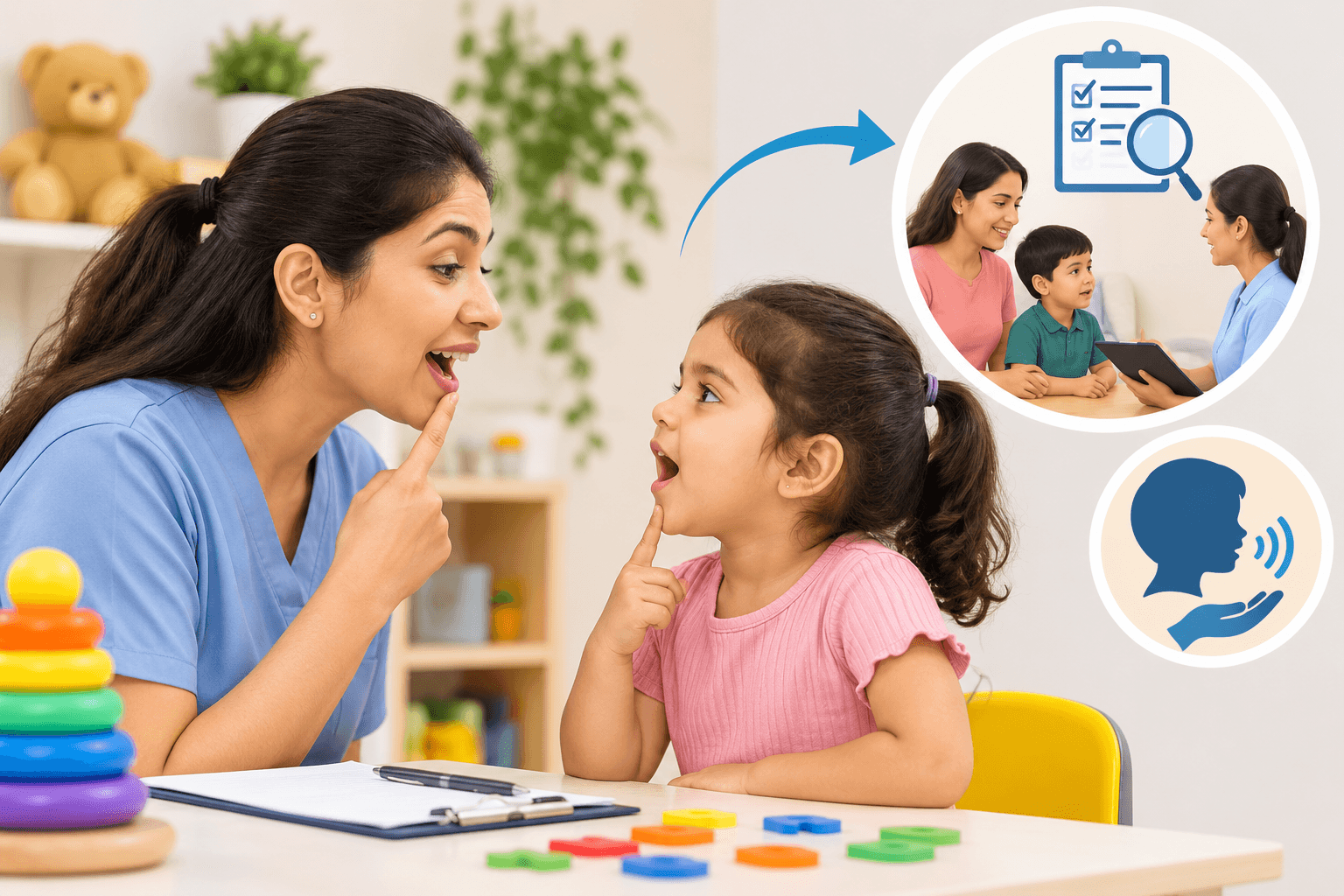
The evaluation is often play-based and happens at home or another familiar place. A team member will watch how your child communicates, ask you questions, and may use screening tools. Your observations carry real weight. You know what happens at 6 a.m. and at bath time. They don’t.
5. Review the results together.
If your child qualifies, you’ll work with the team to create an Individualized Family Service Plan, usually called an IFSP. It lists goals, services, and how often they’ll happen. If your child doesn’t qualify but you’re still worried, ask what else they recommend. You can also seek a separate private evaluation.
What if your child is already three or older?
Once a child turns three, the system shifts. Services move from the early intervention program to the public school district under Part B of IDEA, often called Child Find. Many districts offer free evaluations for preschoolers, even if the child isn’t enrolled in the school.
The process works similarly. Put your request in writing, addressed to the district’s special education or preschool services office, and keep a copy. A written request creates a paper trail and starts legal timelines. It doesn’t have to be fancy. Two or three sentences describing your concern and asking for an evaluation is plenty.
When stuttering is the concern
Stuttering deserves its own mention because it behaves differently from many other speech issues. Many young children go through a period of repeating sounds or words as their language explodes, and a good number of them grow out of it. But some don’t, and it’s hard for parents to tell which path their child is on just by listening.
Warning signs that point toward getting a professional opinion sooner rather than later include stuttering that lasts more than a few months, struggle or tension in the face and body while speaking, a family history of stuttering, visible frustration, avoiding talking, or blocks where the child seems to be trying to speak but no sound comes out.
Waiting to see what happens is understandable. But an evaluation costs you nothing in this setting, and it replaces guessing with information. Even if the answer is “keep an eye on it,” that’s a real answer you can act on.
And if you’d like a specialist’s view without navigating forms and waiting lists, you can book a free stuttering consultation and talk through exactly what you’re noticing with someone who works with stuttering every day. No pressure, just clarity.
How to prepare so the evaluation is useful
You can make the most of the appointment with a little prep work.
Write down specific examples. “He gets stuck on the first sound of words, especially when excited” is far more helpful than “he stutters sometimes.” Note when it’s worse and when it’s better: tired, rushed, talking to grandparents, or answering questions versus telling stories.
Record a short video or two on your phone of everyday talking. Kids sometimes clam up or suddenly become fluent when a stranger is in the room, and a video proves what you’ve seen.
Gather a few facts: when your child said their first words, how they’re doing with understanding instructions, any ear infections, hearing concerns, or family history of speech and language difficulties. And keep a short list of your own questions so you don’t forget them once the conversation starts.
Common worries, answered honestly
“Will I be labeling my child too early?”
An evaluation isn’t a label. It’s a snapshot. Many families find that the process feels more like a relief than a verdict.“What if they say it’s nothing?”
Then you’ve gained peace of mind, and you now have a baseline to compare against if things change.“What if I’m told there’s a waitlist?”
Ask to be placed on it right away, and ask what you can do in the meantime. Parent coaching, home strategies, and online options can fill the gap, and the brain doesn’t pause while you wait.“Do I have to do this alone?”
Not at all. Speech-language pathologists, pediatricians, and family support organizations all exist to help you move through the system.
What you can do at home while you wait
Early intervention isn’t only something that happens in a session. The daily rhythm of home matters more than any single appointment. Slow your own speech down a little. Pause before answering questions so your child feels no time pressure. Get down to their level, make eye contact, and give them your full attention when they talk, even if it takes a moment for the words to arrive.
Resist the urge to finish their sentences or say “slow down” or “take a breath.” Those well-meant comments can add pressure, and pressure tends to make speech harder, not easier. Instead, show that you’re listening to what they say, not how they say it.
The bigger picture: why the brain deserves a smarter approach
Here’s something I wish more people understood. Speech difficulties aren’t a sign of laziness, bad parenting, or a child who “just needs to try harder.” They’re rooted in how the brain coordinates timing, planning, and movement. Brain imaging studies have shown differences in how speech networks communicate in people who stutter, which helps explain why willpower alone doesn’t fix it.
That’s exactly why approaches built on how the brain actually learns tend to work better than simply drilling techniques. If you’re curious about what that looks like in practice, the neuroscience method behind our work is explained in detail, with the reasoning behind each step laid out clearly.
Your next step
If you take only one thing from this article, let it be this: you’re allowed to ask for help before you’re sure something is wrong. The system for free evaluation exists precisely because early questions deserve early answers.
Find your state’s early intervention program, make the call, and say the words: “I’d like to request an evaluation.” That one phone call can open doors to support, tools, and a clearer picture of your child’s strengths and needs. The brain is ready to learn right now. Give it the best chance you can.
Ready to Put This Into Practice?
Download the app and start practicing today
Reading is the first step. Real progress comes from consistent daily practice. Use StopStutter to build confidence and improve your speech every day.


