ReviewOctober 9, 2026
Listening to Your Own Voice
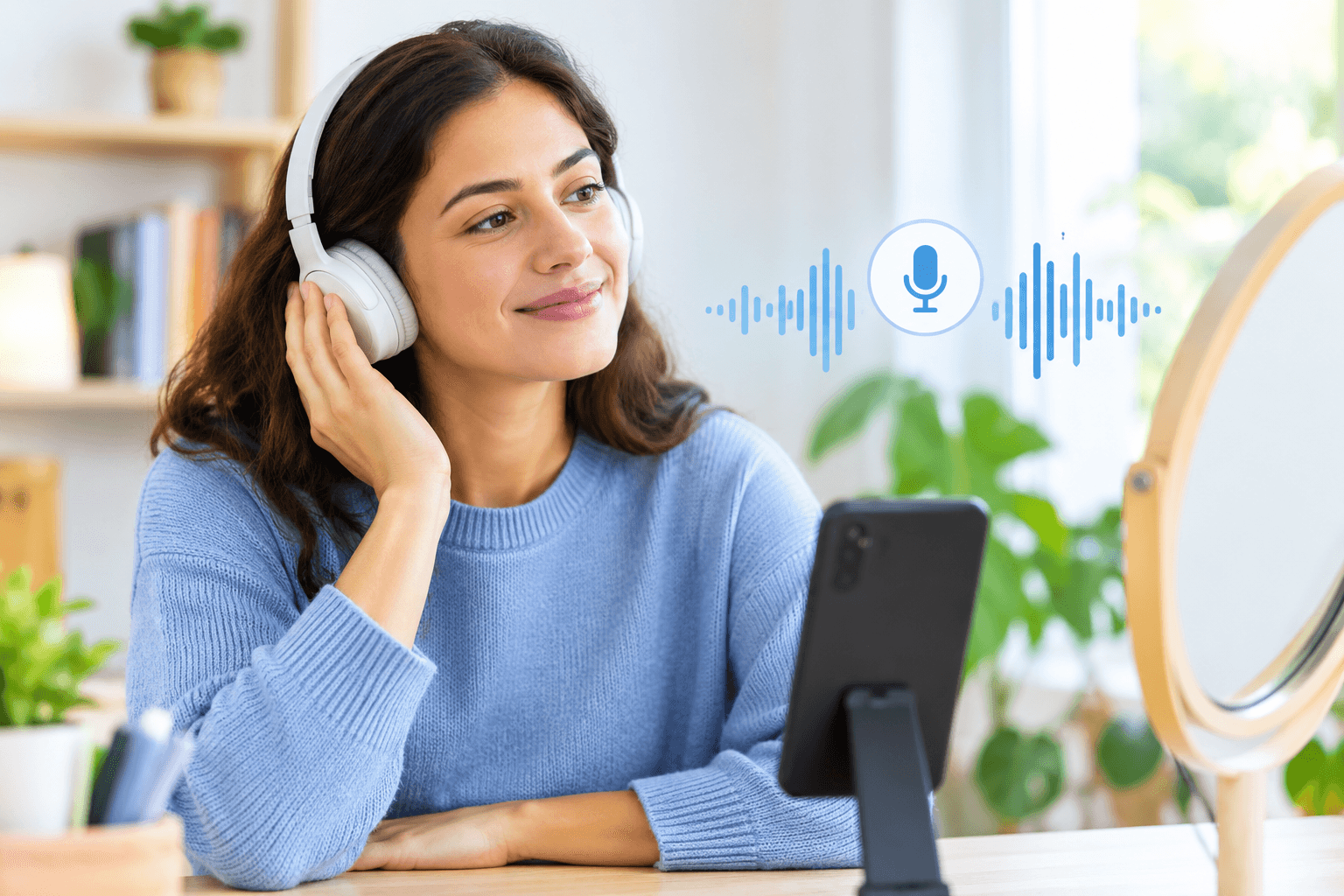
Listening to your own voice is one of the simplest ways to learn how you really sound, and it can help you speak with more calm and control over time. When you play back a recording, you hear your speech the way other people hear it, without the echo inside your own head. That clear picture lets you spot patterns, notice progress and slowly lose your fear of the sound you make. If you want the bigger picture, start with our guide on how to stop stuttering.
Most people wince the first time they hear themselves on a recording. That reaction is normal, and it says nothing about whether your voice is good or bad. It’s just unfamiliar. For people who stutter, the discomfort can run deeper, because the playback seems to confirm every fear they carry about speaking. This post explains why that happens and how to turn a tough moment into a useful habit.
Many speakers in our community tell us the same story. Hearing themselves back felt unbearable at first, then became their favorite practice tool. Pairing recordings with guided online stuttering therapy gives the habit some structure, so you never sit alone with a playback wondering what to fix.
Why Listening to Your Own Voice Feels So Strange
When you speak, your voice reaches your ears in two ways. Sound travels through the air, and it also vibrates through the bones of your skull. The bone route adds warmth and depth, which is why your voice feels richer inside your head. A recording only picks up the air route, so it sounds thinner and higher than you expect. Your brain notices the gap and tags it as wrong. It isn’t wrong. It’s the voice everyone else has heard all along.
There’s an emotional piece too. Many of us avoid hearing ourselves for years, so the first playback lands like meeting a stranger who happens to share your face.
Why a Stutter Makes Playback Feel Heavier
If you stutter, you may brace for the worst before you press play. Every block or repetition can feel like proof of a problem. But a recording is just information. It shows rhythm, pace and tension without the panic of a live conversation. Once you see it that way, the sting starts to soften.
Listen to My Own Voice: Why It Gets Easier
Familiarity does most of the work. The more often you hear your recorded voice, the less shocking it becomes. Many speakers tell us that after a couple of weeks of short daily sessions, they stop flinching and start getting curious.
How to Do a Listening to Your Own Voice Recording Session Right
A good session is short, planned and kind. You’re collecting information, not grading a performance.
Build a Simple Daily Routine
Pick a quiet spot and a steady time, ideally when your body already feels settled after a meal or a walk, so the habit becomes something you look forward to instead of something you dread.
Record something real, such as reading a news paragraph, describing your day or rehearsing a phone call you need to make, because natural speech shows you far more than a polished script ever could.
Use the voice memo app on your phone and hold the microphone about a hand’s length from your mouth, which gives you a clear sound without the distortion that comes from speaking too close.
Keep a small notebook nearby and write one thing that sounded good and one thing you’d like to try differently, so every session ends with progress instead of criticism.
Listening to Your Own Voice Recording in Three Passes
The first pass is for listening only. Don’t pause, don’t wince, just let it play. On the second pass, notice your pace, your volume and the places where your breath ran short. On the third pass, listen for the moments that went well, however small. Those wins matter, because the stuttering mind tends to hold onto the hard parts and skip the rest.
What Playback Can Do for People Who Stutter
It shows your real speaking pace. Many people who stutter feel they sound far slower or more broken than they do, and a recording often reveals smooth stretches you’d never notice in the moment.
It helps you catch tension early. Tight jaws, clipped breaths and rushed starts are easier to hear on playback, and once you can hear them, you can begin softening them on purpose.
It builds a record of progress. Saving one clip a week lets you compare month one with month three, which is a strong reminder when a bad day tries to convince you nothing has changed.
It lowers fear of the sound itself. Each calm listen teaches your nervous system that your voice is safe to hear, and that safety tends to carry over into live conversation.
It makes practice more targeted. Instead of guessing what to work on, you can pick one habit, like pausing at the end of a phrase, and check your recording for it.
Playback works best when it’s paired with proven tools. Our guide to the top 7 stuttering therapy techniques that actually work shows you what to practice, and your recordings show you whether it’s landing.
Helping a Child Get Comfortable With Their Voice
Parents often ask whether young children should hear themselves back. For preschoolers, keep it light and playful. Let them hear a silly song or a made up story, and never point out stumbles. If your little one is repeating sounds or words, our post on 2 year old stuttering explains what’s common at that age and when it makes sense to ask for support.
Mistakes That Can Make Playback Backfire
Listening for too long. Long sessions turn curiosity into rumination, so keep each one to about ten minutes and stop while you still feel steady.
Hunting only for flaws. If you press play looking for mistakes, you’ll find them everywhere, so always name at least one thing that went well before you close the app.
Comparing yourself to polished speakers. Podcast hosts and broadcasters edit, rehearse and re-record, so measuring your raw practice against their final cut isn’t a fair match.
Doing it only on bad days. If you record just when you feel low, you build a file of frustration, so mix in easy, relaxed speaking days to keep the picture honest.
Turning Playback Into Lasting Change
A recording can show you what’s happening, but it can’t change it by itself. Real change comes from practicing new habits in daily life, then checking your recordings to see what’s shifting. Treat each clip like a quiet coach’s note, not a verdict.
Recordings reveal the pattern, and lasting change comes from retraining how your brain and body handle speech. That’s the idea behind the neuroscience method created by Lee Lovett, who stuttered himself and now works with certified stuttering specialists who are ex-stutterers too. The program reports that 95% of its therapy clients measurably improved their OASES scores, a clinical assessment speech language pathologists commonly use. Playback then becomes one practical tool inside a bigger, guided plan.
Frequently Asked Questions
Why does my voice sound different in recordings?
You normally hear yourself through both air and the bones of your head. The bone route adds warmth and depth, but a recording captures only the air route. So playback sounds higher and thinner, and it’s the same voice other people hear every day.
How often should I practice listening to my own voice?
Five to ten minutes a day is plenty. Short, steady sessions work better than one long, stressful one, and even a two minute session counts on a heavy day. The goal is a gentle habit you can keep up for weeks.
Can listening to your own voice help with stuttering?
Yes, it can raise awareness of your pace and tension, reduce fear of the sound and show your progress over time. It works best alongside guided practice, because playback shows you the pattern while a plan helps you change it.
What if I really hate how I sound?
That’s very common, and it usually fades with time. Keep sessions short, name one thing that went well each time and give it a few weeks before judging. If the discomfort stays strong, a stuttering specialist can guide you.
Do I need a special app or equipment to record myself?
No. The voice recorder on your phone is enough. A quiet room and a microphone held about a hand’s length from your mouth matter far more than fancy gear, and saving one clip a week lets you track your progress.
Give Your Voice the Welcome It Deserves
Listening to your own voice gets easier every time you do it, and it turns a source of fear into a source of useful information. Start with five minutes, keep your tone kind and let the small wins stack up. If you’d like someone beside you on the way, you can book a free consultation and talk through your goals with a team that understands.
Ready to Put This Into Practice?
Download the app and start practicing today
Reading is the first step. Real progress comes from consistent daily practice. Use StopStutter to build confidence and improve your speech every day.