


ReviewSeptember 14, 2026
Phone call anxiety
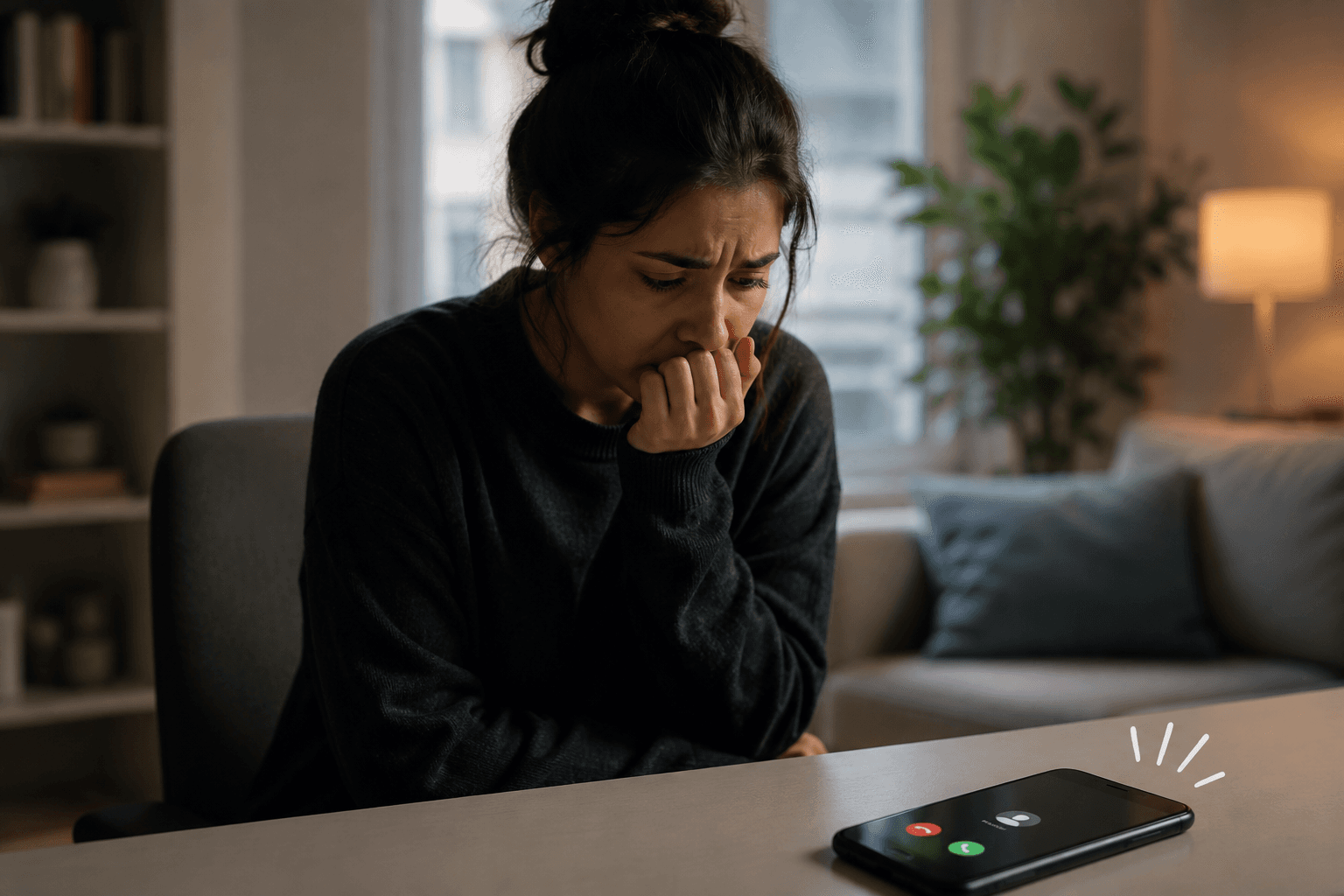
Phone call anxiety is the fear, dread, or physical stress reaction that happens before, during, or after a phone conversation. Also known as telephobia, it can make a two-minute call feel like a full-blown ordeal. If your palms sweat when your phone rings, if you draft a five-line text instead of calling for a 30-second question, or if you rehearse a work call ten times before dialing, you are not being dramatic. You are experiencing a real anxiety response that millions of people share.
Phone anxiety often overlaps with other communication fears. Many people who search for how to stop stuttering also dread the phone, because calls strip away facial expressions, gestures, and eye contact. What is left is just a voice, a delay, and the pressure to fill silence in real time.
For people whose phone anxiety is tied up with speech blocks or fluency worries, online stuttering therapy can help address both concerns at once, since the same nervous system pattern drives both. For everyone else, the tips further down will still apply, whether or not stuttering is part of the picture.
There is real brain science behind why calls feel so hard. Research on neuroscience stuttering shows how the brain's threat response kicks in during high-pressure verbal tasks. Phone calls happen to be one of the highest-pressure verbal tasks the average person does in a normal week.
What Is Phone Call Anxiety?
Phone call anxiety is a form of communication anxiety focused specifically on phone conversations. It shows up as physical symptoms like a racing heart, sweaty hands, and shallow breath, mental symptoms like rehearsing scripts and catastrophizing outcomes, and behavioral symptoms like screening every call and letting voicemail pile up. For some people it is mild avoidance. For others, the ringtone alone can trigger a stress response strong enough to feel like a mini panic attack.
Why Do I Have Phone Call Anxiety?
There is not one clean answer. Most people carry anxiety of phone calls for a mix of reasons: real-time processing pressure without visual cues, a fear of being caught off guard, past bad experiences on calls, and a broader shift toward async communication that makes calls feel unusually intense. If you have ever wondered why phone calls give me so much anxiety, why does making phone calls give me anxiety, or why do I have anxiety about phone calls, the honest answer is that your brain is reacting to a real cognitive load, not overreacting.
Anxiety Before a Phone Call
The dread often peaks before you even pick up. You might spend 20 minutes writing out talking points for a five-minute call, refresh the number three times, or invent a small task to delay dialing. This anticipatory anxiety is your nervous system flagging the call as a threat before it happens. Naming it as anticipatory helps, because it is the easiest part of the cycle to interrupt.
Anxiety Making Phone Calls at Work
Work calls carry extra weight. There is a boss, a client, or a colleague on the line, and the stakes for sounding "professional" feel higher. If you dread work calls specifically, try scheduling them during your sharpest hours, keeping a short bullet-point script visible, and standing up while you talk. Standing changes your breath pattern and often makes your voice sound steadier.
Social Anxiety and Phone Calls
Social anxiety and phone calls have a well-documented link. Social anxiety is the fear of being judged, and phone calls remove the visual feedback that reassures you the other person is not reacting badly. All you have is silence and tone, which are easy to misread. If your social anxiety making phone calls is part of a broader pattern, working on both together is more effective than treating the phone as a standalone problem.
ADHD Phone Call Anxiety
ADHD and phone anxiety often travel together. Real-time back-and-forth demands strong executive function, and waiting for someone to pick up is stimulation-poor in a way that can feel unbearable. Many ADHDers also worry about forgetting the point mid-call, tuning out for a second, or blurting something. Writing a two-line agenda before dialing helps more than any breathing exercise.
Phone Call Anxiety Autism Connection
For autistic adults, calls remove almost every source of information that makes communication feel safe. There is no facial expression, no lip movement, no body language, and no clear turn-taking signals. Add sensory sensitivity to ringtones and vocal tone processing on top, and calls can be genuinely exhausting. Preferring text is not avoidable in this case. It is often a legitimate accommodation.
Gen Z Phone Call Anxiety
Gen Z did not grow up making phone calls the way older generations did. Texting, voice notes, DMs, and async video have been the default since childhood. Calls feel high-pressure by comparison, not because Gen Z is "too soft" (the tired take), but because the skill was never rehearsed daily. That is why Gen Z phone call anxiety is so widely reported now.
Anxiety Unknown Phone Calls
Unknown numbers hit a different nerve. Your brain cannot predict what the call is about, and prediction is how anxiety keeps itself in check. Add the spam call epidemic on top, and most people default to ignoring unknown numbers entirely. That is usually fine, but if you are actively avoiding an important callback like a doctor or recruiter, let a trusted person screen it or use voicemail transcription to break the loop.
Phone Call Anxiety Meme
"I'll let it ring and text them back next week" has quietly become its own genre online. The phone call anxiety meme is one of the most relatable jokes across TikTok, Reddit, and Instagram. It is funny because it is true, and because it makes people who thought they were alone realize how common the experience is. The meme validated the anxiety. It does not solve it. That is what the next sections are for.
Phone Call Anxiety Reddit Threads
Reddit threads on phone call anxiety pull thousands of comments, and the pattern is consistent. People describe rehearsing conversations, avoiding parents for months, and feeling relief when meetings move to email. If you have searched how to get over phone call anxiety reddit or social anxiety phone calls reddit and mostly found people venting, you are seeing something important. This is a shared experience, not a personal flaw.
How to Get Over Phone Call Anxiety
There is no single trick that works for everyone, but the approaches that actually help share a pattern. They lower the perceived stakes of the call, give your brain a script to fall back on, and use exposure gradually. Overcoming phone call anxiety, or getting rid of phone call anxiety long-term, is less about pushing through and more about training your nervous system to stop treating a two-minute conversation as a threat. That is the same principle behind how to deal with phone call anxiety in any situation.
Phone Call Anxiety Tips That Actually Work
Phone call anxiety tips only help if they hold up in real life. Here are the ones that do:
Write your first two sentences before dialing. Just the opening.
Call at your calmest time of day, not squeezed between other stressful tasks.
Stand up or walk while talking. It regulates breath.
Prep a graceful exit line like, "I have to run in five, so quick question."
After the call, resist replaying it. Move on to something absorbing.
How to Make a Phone Call With Social Anxiety
If you are trying to make a phone call with social anxiety, or make a phone call when you have anxiety of any kind, start smaller than you think you need to. Order takeout by phone once a week. Confirm a dentist appointment by voice instead of the app. Low-stakes reps rewire the brain's association with calls. When it is finally time for a hard call, that muscle is already warmer. Most tips for making phone calls for people with social anxiety skip this graduation step and jump straight to "just do it," which almost never works.
How to Get Over Anxiety of Making Phone Calls
The long game for how to get over anxiety of making phone calls looks like this. Understand your specific triggers (calls with strangers? your boss? bad-news calls?), build calls of that type into your week in the lowest-stakes way possible, and treat every completed call as a small win. Consistency beats intensity. One doable call a day for a month works better than one big scary call once.
Phone Numbers to Call for Anxiety Support
If your phone anxiety is part of a bigger anxiety picture, help lines exist for exactly this. In the US, the 988 Suicide and Crisis Lifeline handles general emotional crises. NAMI (1-800-950-6264) offers mental health information and support. In the UK, Samaritans (116 123) is available 24/7. And yes, using the phone to work through phone anxiety is ironic. Most of these also have text and chat options.
Frequently Asked Questions
Why do phone calls give me anxiety?
Phone calls demand real-time verbal processing without any visual cues, which is a lot for your brain. If you also have social anxiety, ADHD, or autism, calls add extra layers of stress. It is a common wiring reaction, not a personal flaw.
What is the 3-3-3 rule for anxiety?
The 3-3-3 rule is a quick grounding technique. You name three things you can see, three things you can hear, and move three parts of your body. It pulls your brain back to the present moment when anxiety starts spiraling.
Do people with ADHD struggle with phone calls?
Yes, very often. ADHD makes real-time back-and-forth and sustained attention harder, and calls demand both. Many ADHDers also find waiting for someone to pick up uniquely uncomfortable because it is stimulation-poor.
Is telephobia rare?
Not at all. Telephobia is widely reported, especially among Gen Z and millennials, with multiple surveys suggesting most younger adults feel some level of phone anxiety. It is one of the most common everyday anxieties today.
Phone call anxiety is real, common, and manageable. Whether yours shows up as anxiety before a phone call, anxiety when making phone calls at work, or a general dread of ringing phones, small consistent steps work better than any big overhaul. Start with one low-stakes call this week and build from there.
Ready to Put This Into Practice?
Download the app and start practicing today
Reading is the first step. Real progress comes from consistent daily practice. Use StopStutter to build confidence and improve your speech every day.


