


ReviewSeptember 25, 2026
Preparatory Set
You know the moment. A word is coming up, maybe your own name or the first word of your coffee order, and your body starts bracing before your mouth even gets there. Your jaw tightens. Your breath catches somewhere in your chest. By the time you try to speak, the block has already begun. That tiny window before the word is exactly where a preparatory set does its work.
A preparatory set is a stuttering technique you use right before a word you expect to stutter on. Instead of pushing through with force, you pause for a beat, let go of the tension, and start the word slowly and gently. If you have been looking into how to stop stuttering, this is one of the most practical tools you can learn, because it acts at the very moment fear shows up.
In this guide, we will walk through the preparatory set meaning, where the technique comes from, a few real examples you can try today, and why it works so much better when it is part of a bigger plan to retrain the brain.
Many people first hear about preparatory sets in a speech clinic, but you do not need to sit in a clinic room to learn them well. With online stuttering therapy, you can practice with a specialist from home and get feedback while the technique is still new and a little awkward, which is when feedback matters most.
Preparatory Set Meaning
The term comes from Charles Van Riper, one of the most influential figures in stuttering research during the 20th century. His approach, often called stuttering modification, taught people three techniques based on timing.
Cancellation happens after a stuttered word. You finish the word, pause, and say it again more easily.
Pull-out happens during a stutter. You catch yourself mid-block and slide out of it smoothly.
Preparatory set happens before the word. You spot the stutter coming and change how you approach it.
Of the three, the preparatory set is usually considered the most advanced. It asks you to notice the stutter before it arrives, which takes awareness, practice, and a bit of courage. But once it becomes second nature, it can stop many blocks from forming at all.
How the Preparatory Set Stuttering Technique Works
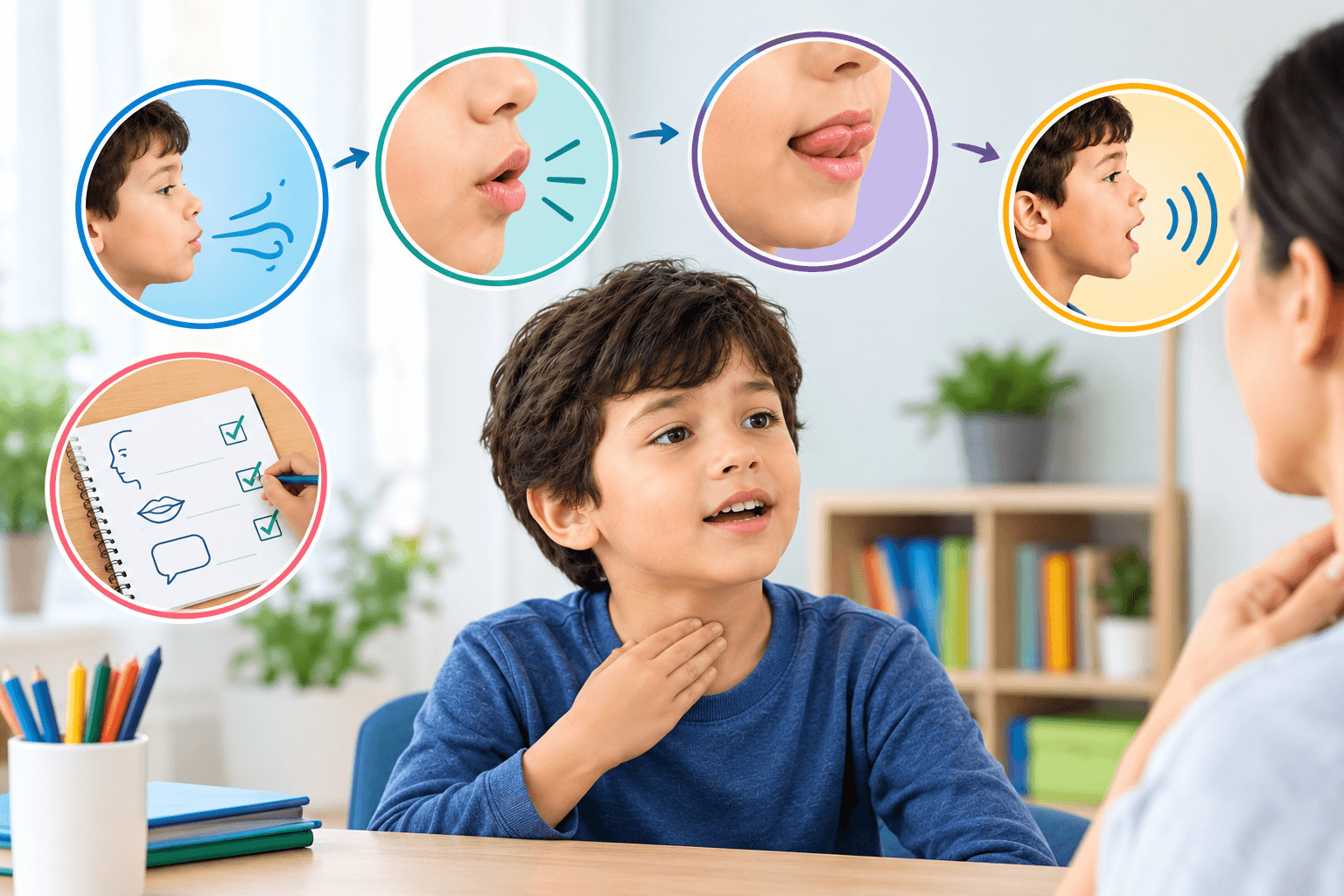
At its core, a preparatory set is a small mental and physical reset. Here is what it looks like step by step.
Notice the anticipation. You feel a word coming that usually trips you up.
Pause briefly. Take a calm, low breath. This is a half second, not a long silence.
Release the tension. Loosen your jaw, lips, tongue, and throat.
Plan a light touch. Think about how softly your lips or tongue will make contact for the first sound.
Ease into the word. Start slowly, with air and voice already moving.
Keep going. Flow straight into the rest of the word and the sentence without stopping to check yourself.
The goal is not to sound slow or robotic. It is to swap a forced, tense start for a relaxed, forward-moving one.
Preparatory Set Examples
Reading about a technique only gets you so far. These everyday situations show how it plays out.
Saying your name. Say your name is Peter, and "P" is a sound you often block on. Normally your lips press together hard and the air gets trapped. With a preparatory set, you pause, relax your lips, and let them barely brush together as the air keeps flowing. The "P" comes out soft and the rest of the name follows naturally.
Ordering at a café. "Can I get a latte?" The "K" sound starts at the back of your tongue, which is a common tension spot. Before speaking, you loosen your tongue, take a small breath, and let the "K" glide out lightly instead of snapping it.
Answering the phone. Vowel sounds like "I" or "Hello" can trigger blocks at the voice box. A good preparatory set stuttering example here is starting with a tiny breath of air before your voice switches on, so the sound begins gently rather than with a hard click in the throat.
Reading aloud. When you scan ahead in a paragraph and spot a feared word, you can prepare for it a line or two early. This is one of the safest ways to build the skill, since there is no listener and no time pressure.
Why Preparatory Sets Work: The Brain Behind the Pause
Stuttering is not only about the mouth. Research points to several brain regions working together during a stutter, including Broca's area (speech planning), the motor cortex (movement), the basal ganglia (timing and habit), the amygdala (fear), and the hippocampus (memory).
When you anticipate a hard word, the amygdala sends out a threat signal. Your body answers with tension, and that tension is often what turns a small hesitation into a full block. A preparatory set breaks that chain. The pause interrupts the fear response, and the gentle start hands your motor system a new plan to follow.
Every time you get through a feared word smoothly, your brain stores that experience. Repeat it often enough and the brain starts to expect fluency instead of struggle. This is neuroplasticity, the brain's ability to rewire itself through repetition at any age, and it sits at the heart of the neuroscience stuttering approach developed by Lee Lovett, an ex-stutterer who has now been stutter-free for forty years.
Preparatory Sets in Stuttering Therapy vs. the Neuroscience Method®
In traditional stuttering therapy, preparatory sets are often taught as a way to stutter more easily. That can bring real relief. The limitation is that if the technique is the whole plan, you may end up managing your speech word by word for years while the underlying fear stays in place.
The Neuroscience Method® takes a wider view. It rests on three pillars, sometimes called the 1-2-3 punch.
Speech Tools help you avoid hearing yourself stutter. A preparatory set fits naturally here, since it stops a block before it forms.
Reading Aloud with Fluency fills your memory with thousands of smooth speech experiences.
Mind Training uses affirmations, visualization, controlled self-talk, and hypnosis to calm the fear response at its source.
Put together, these pillars aim to do more than soften stutters. They work to replace the stuttering habit with a fluency habit. Lee describes his own recovery this way: he spoke fluently for so long, so often, that his stuttering simply faded from disuse. He has since given around 10,000 private sessions free of charge, and several hundred of his students have stopped stuttering.
How to Practice Preparatory Sets for Fluency Every Day
Consistency matters far more than intensity. A little practice every day will rewire the brain faster than a long session once a week. Try building these habits into your routine.
Read aloud daily. Spend time with a book or article, using gentle starts on any sounds you find difficult.
Keep a feared word list. Practice those words on their own first, then inside full sentences.
Start in easy settings. Use the technique with a friend or family member before moving to phone calls or meetings.
Record yourself. Listening back to your fluent moments reinforces them in memory.
Visualize first. Before a tough conversation, picture yourself speaking calmly and easily.
Common Mistakes to Avoid
A few habits can quietly undo your progress with preparatory sets.
Turning the pause into avoidance. A long delay, a filler word, or swapping the word out entirely keeps fear in charge. The pause should be brief and followed by the actual word.
Overdoing the slow start. Stretch the first sound only a little. Too much and your speech starts sounding unnatural, which can make you more self-conscious.
Saving it for emergencies. If you only use the technique under pressure, it will feel clumsy exactly when you need it. Practice it when the stakes are low.
Relying on technique alone. Without mind training to address fear, you may keep bracing for hard words even when your technique is solid.
Your Next Step Toward Fluent Speech
A preparatory set is a powerful tool because it meets stuttering at its starting point, that split second of anticipation. On its own, it can make speaking feel easier. Paired with daily reading aloud and mind training, it becomes part of a real process of rewiring your brain for fluency.
If you want guidance on how to fit preparatory sets into a daily routine built around your own speech patterns, a certified specialist who has overcome stuttering personally can help you map it out. Book a free stuttering consultation and take the first step toward the fluent voice you have been working toward.
Ready to Put This Into Practice?
Download the app and start practicing today
Reading is the first step. Real progress comes from consistent daily practice. Use StopStutter to build confidence and improve your speech every day.


