


ReviewSeptember 9, 2026
Prolongations in Stuttering: What They Are, Real Examples, and What Helps
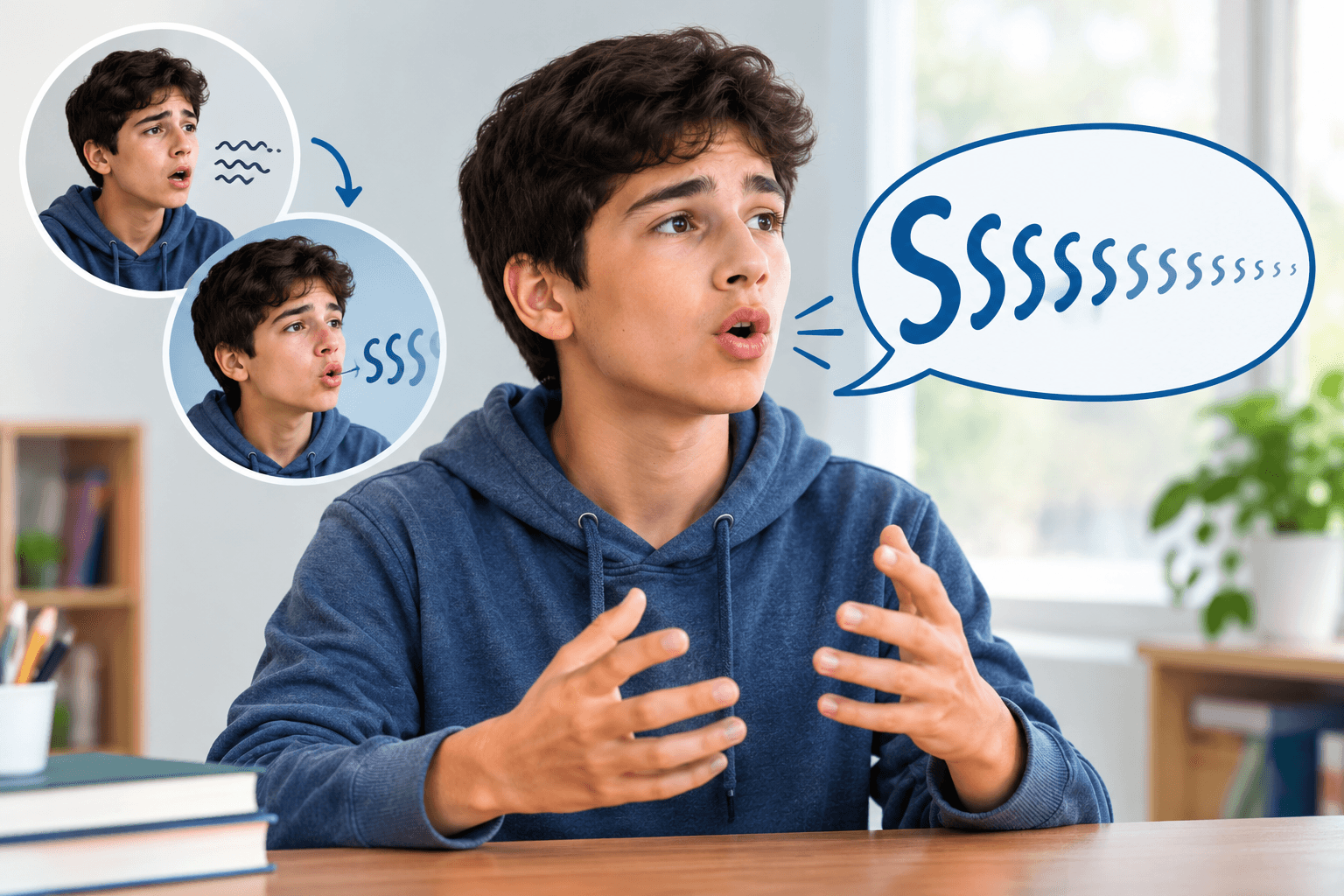
You’re mid-sentence, you reach for a word, and the first sound just won’t let go. “Sssssoup.” “Mmmmy.” Your voice keeps running, but the next sound can’t start. That’s a prolongation, and if it happens to you, you’re far from alone.
Prolongations in stuttering are involuntary stretches of a sound where your voice or airflow keeps going but you can’t move on. Along with repetitions and blocks, they’re one of the three core stuttering behaviors described by the American Speech-Language-Hearing Association (ASHA).
If you want to Overcome stuttering, the first step is understanding what’s actually happening when a sound stretches. Once you can name it, it gets a lot less scary. Many people also find that online stuttering therapy makes this kind of work easier to fit into real life, because you practice from home instead of squeezing in clinic visits.
This guide covers what prolongations are, how ASHA describes them next to repetitions and blocks, and what they sound like in real speech. We’ll also untangle prolonged speech, elongated speech, and a therapy technique that sounds a lot like the thing you’re trying to get rid of.
What Are Prolongations in Stuttering?
Think of a record player getting stuck on one note. You know the word you want, but the first sound keeps going and going. Your lips might press together, your jaw might tighten, or your throat might squeeze while you wait for the sound to finally release.
The sound itself is usually small. The effort behind it is not. A two-second stretch can feel like a minute when someone is waiting for you to finish.
The ASHA Stuttering Definition: Repetitions, Prolongations, and Blocks
ASHA describes stuttering as a disruption in the normal flow of speech. Under the ASHA stuttering definition, the core behaviors fall into three groups: repetitions, prolongations, and blocks. Most people who stutter use a mix of all three, and the mix shifts from day to day and from one situation to the next.
ASHA also recognizes that stuttering often comes with secondary behaviors, like eye blinks, head movements, or avoiding certain words, plus feelings like frustration and fear. The emotional side is every bit as real as the sound itself.
Stuttering Blocks, Repetitions, and Prolongations: How to Tell Them Apart
Stuttering blocks, repetitions, and prolongations can look similar from the outside, but they feel very different from the inside. Here’s a quick way to separate them.
Repetition: A sound, syllable, or word repeats. Example: “b-b-b-ball.”
Prolongation: A sound stretches out while your voice or airflow keeps going. Example: “sssssoup.”
Block: Airflow or voice stops, with tension and no sound. Example: “…(silence)… want.”
A simple rule of thumb: if you can hear the sound the whole time, it’s a prolongation. If the sound disappears and the face goes tense, it’s a block. If the sound keeps restarting, it’s a repetition.
Prolongation Stuttering Examples: What a Stretched Sound Looks Like in Real Speech
If you’ve ever wondered what an example of prolongation in stuttering looks like on paper, it’s usually the first sound of a word held far longer than normal, like “sssssandwich” or “mmmmonday.” Reading about it only goes so far, so here are a few more. Say them out loud and hold the stretched part.
Sound prolongation stuttering on consonants
“I want sssssome water.”
“Can I get a ffffffork, please?” (a stretch on a word you’ve been dreading)
Sound prolongation stuttering on vowels
“Aaaaand then we left.”
“Eeeeeverybody was already there.”
Prolongations at the start of a sentence
“Mmmmmy appointment is at three.”
Notice that these usually land on the first sound of a word, and often on a word that matters, like a name, an order, or a question. That’s no coincidence. The pressure of getting it right tends to make the stretch longer.
They can also look quite different from the outside. Some people hide them so well that nobody around them knows. That quiet effort is a real cost, even when the speech sounds smooth.
Why Does Sound Prolongation Stuttering Happen?
Nobody is stretching sounds out of nervousness, laziness, or a lack of practice. The National Institute on Deafness and Other Communication Disorders (NIDCD) points to a mix of genetics and differences in how the brain coordinates speech movements.
Speaking looks effortless, but it’s one of the most complicated things your body does. Your brain has to plan the sounds, time the breath, and move your lips, tongue, and vocal cords in a split-second sequence. In stuttering, that handoff between planning and movement gets disrupted. When the handoff stalls, the sound can keep going while the next one waits.
That’s also why stress, tiredness, and pressure often make prolongations worse. They add noise to a system that’s already working hard.
Prolonged Speech vs. Prolongations: Not the Same Thing
This is where a lot of people get tangled up, so it’s worth slowing down on. A prolongation is something that happens to you. Prolonged speech is something you do on purpose, and you may also see it called elongated speech or stretched speech.
In a therapy setting, prolonged speech means deliberately slowing down and stretching your syllables so that speech comes out smoothly. It’s a learned skill. A prolongation in stuttering is the opposite: unplanned, often tense, and out of your control.
Elongated Speech: When Stretched Sounds Aren’t Stuttering
Not every stretched sound is stuttering. Everybody elongates a word now and then, like a thoughtful “sooo…” or an “uhhhh” while searching for what to say. Regional accents and speaking styles can stretch vowels too.
What sets prolongations in stuttering apart is that the stretch is unplanned, it often comes with tension, and it happens when you know exactly what you want to say. If the stretch feels stuck instead of chosen, it’s worth having a speech-language pathologist take a listen. In a small number of cases, unusually drawn-out speech points to something other than stuttering, which is one more reason a proper evaluation beats guessing.
Prolongation Technique for Stuttering: Does It Work?
Sometimes, with caveats. Techniques that use gentle, stretched speech sit in the family of fluency shaping techniques, and they can lower the amount of visible stuttering. A prolongation technique for stuttering teaches you to ease into words and keep airflow moving instead of forcing the sound out.
Here’s the honest part. These techniques can feel robotic. They’re hard to keep up in a fast conversation, and they ask you to monitor your speech constantly, which is tiring. Many people use them well in the therapy room and drop them within weeks at work.
If you want to try the in-the-moment version, here’s a simple four-step approach.
Notice the stretch without panicking. Tension makes it longer.
Ease out of it. Don’t force the next sound. Let the tension drop and move forward slowly.
Start words gently. A soft start on the first sound takes pressure off the timing.
Pause, then continue. A short, calm pause beats pushing through.
These can help, but they work best with someone guiding you. If you’d like a second opinion on what would suit your speech, you can book a free stuttering consultation and talk it through with a specialist. No pressure, just a real conversation.
Prolongations in Kids vs. Adults Who Stutter
Prolongations look different in kids and adults. Many young children go through a stage of stretched sounds while their language is growing fast. It usually starts somewhere between ages 2 and 5, and roughly three in four kids stop on their own, which is the commonly cited figure.
That’s why the best first step with a child is calm listening, not correction. Don’t finish their words, don’t say “slow down,” and give them time to reach the end of the sentence. The Stuttering Foundation is a good US nonprofit resource for parents.
Adults are a different story. By adulthood, prolongations are usually a long-standing pattern, tangled up with years of swapping words, skipping calls, and staying quiet in meetings. The sound might be small, but the effort behind it isn’t.
Either way, earlier support means less energy spent on hiding. For a child, a speech-language pathologist can tell you whether it’s likely to pass. For an adult, the work is usually about untangling the habits, not just the sound.
When to Get Help for Prolongations in Stuttering
Consider reaching out if any of these sound familiar:
You avoid words, calls, or situations because of stretched sounds
Prolongations come with visible tension in your face, jaw, or neck
Your child’s stretches have lasted more than six months or are getting worse
Stuttering is affecting school, work, or your confidence
You can’t tell whether it’s a prolongation, a block, or something else
If you’re in the US, you have a few routes. Adults can search ASHA’s ProFind directory for a certified speech-language pathologist, and many specialize in fluency. For children, public schools are required under the Individuals with Disabilities Education Act (IDEA) to evaluate kids with a suspected speech or language disorder, and it helps to put your request in writing. Children under 3 can be referred to their state’s early intervention program. Insurance coverage for stuttering therapy varies a lot by plan, so call your insurer before you book.
Frequently Asked Questions About Prolongations in Stuttering
What are prolongations in stuttering?
Involuntary stretches of a sound, like “sssssoup,” where your voice or airflow keeps going but you can’t move on to the next sound.
What is an example of prolongation in stuttering?
Saying “mmmmy name is Sam” or “I want sssssome water.” The first sound is held far longer than normal, often with tension in the jaw, lips, or throat.
How does ASHA define repetitions, prolongations, and blocks?
ASHA groups the core behaviors into three types. Repetitions repeat a sound, syllable, or word. Prolongations stretch a sound. Blocks stop airflow or voice, usually with visible tension and silence.
What’s the difference between prolonged speech and prolongations?
A prolongation is an unplanned stretch. Prolonged speech, sometimes called elongated speech, is a deliberate technique where you slow down and stretch syllables. One happens to you. The other is a skill you practice.
Does the prolongation technique for stuttering work?
It can reduce visible stuttering for some people, especially with guided practice. But it often feels unnatural in fast conversations, so many people do better pairing it with approaches that address the timing and planning underneath.
Where to Go From Here
Prolongations in stuttering are common, they’re workable, and they say nothing about your intelligence or your worth. A stretched sound is a timing problem in a very complicated system, not a character flaw.
If you want to go deeper into why the brain gets stuck, the research behind neuroscience stuttering is a good place to start. It looks at what’s happening underneath the sound and how to work with it instead of fighting it.
Ready to Put This Into Practice?
Download the app and start practicing today
Reading is the first step. Real progress comes from consistent daily practice. Use StopStutter to build confidence and improve your speech every day.


