


ReviewSeptember 17, 2026
Receptive vs Expressive Language: Meaning, Examples and Delay Signs
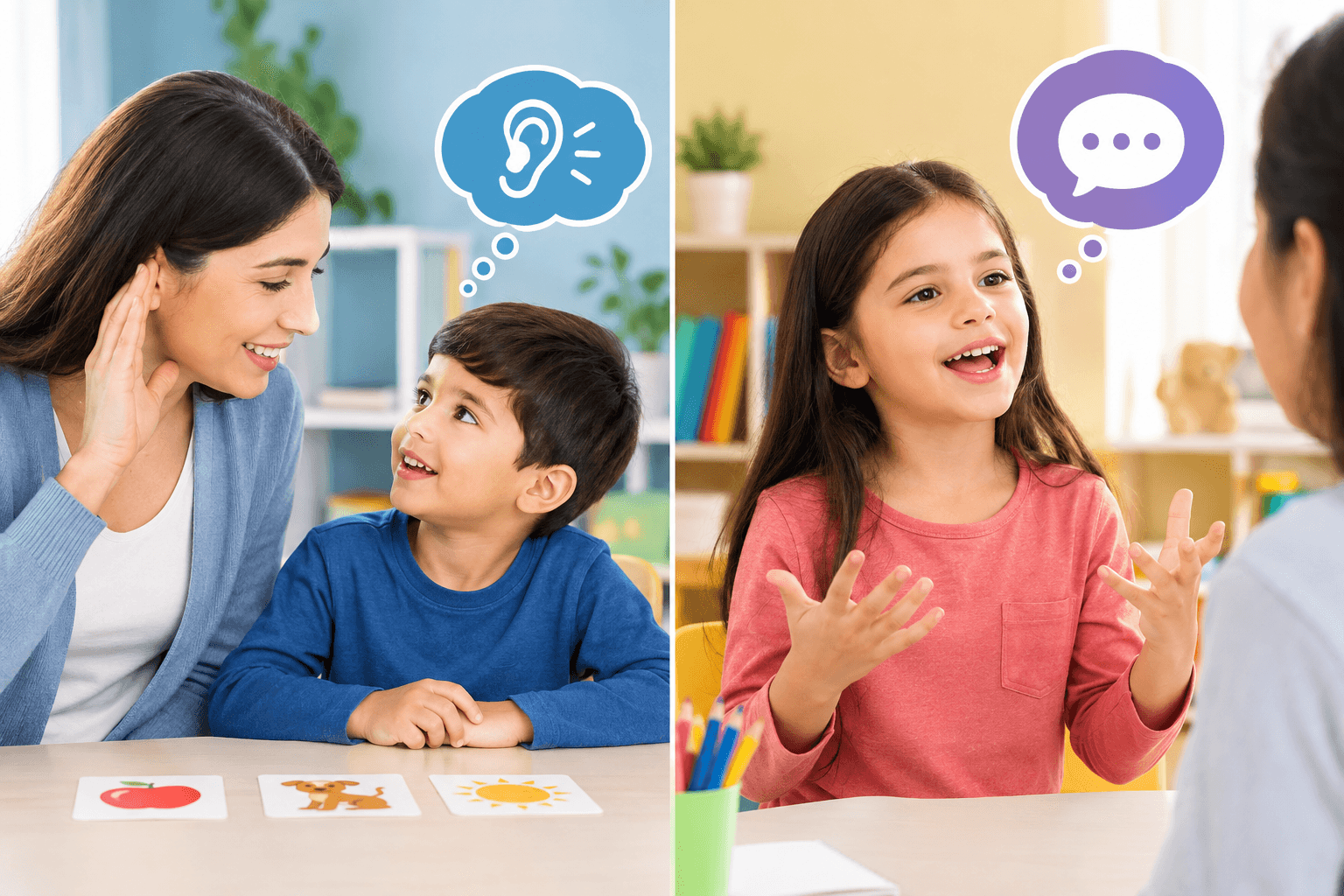
Receptive vs expressive language is the difference between understanding words and using them. Receptive language is how a person listens, reads and makes sense of what others say, while expressive language is how they talk, write and share their own ideas. Some children understand almost everything but struggle to speak, and that gap is often the first sign of a delay. At Stop Stutter, we see this mix a lot, so this guide covers simple examples, the signs to watch for and when to ask for help.
Expressive Language and Receptive Language: What Sets Them Apart
Every ordinary conversation you have relies on both channels working together. Receptive language lets your brain decode incoming words, tone, gestures, and context. Expressive language then organises your private thoughts into full sentences and sends them out through speech, writing, or signs. Children usually understand words months before they can produce them, which is why a one-year-old will bring you a shoe when asked but cannot say the word yet. If your child seems to understand far more than they can express, or expresses more than they truly grasp, it is worth paying attention early on. Many parents who first explore online stuttering therapy for adults at Stop Stutter discover that gentle language support is quietly part of the same journey. The two skills feed each other constantly, and strengthening one often lifts the other with time.
Receptive Language vs Expressive Language Explained
Receptive language covers listening, reading, understanding gestures, and following directions from other people. Expressive language covers speaking, writing, gesturing, and putting personal ideas into words that others can follow with ease. Together they form the backbone of every social interaction, classroom lesson, and family dinner conversation.
How Receptive Skills Develop
Babies start recognising familiar voices in the womb. By six months, most infants respond clearly to their own name. By age two, a typical child understands hundreds of words and follows simple two-step directions. If receptive skills lag behind, a child may seem inattentive, ignore requests without meaning to, or struggle in noisy classrooms.
How Expressive Skills Develop
Expressive milestones usually follow a slower arc. First words appear around twelve months, two-word phrases by age two, and full sentences by age three or four. A child who understands the world but cannot narrate it often gets labelled shy or stubborn, when the real story is a quiet delay in expressive output.
Expressive vs Receptive Language Examples
Real everyday examples make the difference much easier to see. Here are four situations most parents and teachers will instantly recognise from home or school:
A four-year-old points to a cat in a picture book when asked, but calls every four-legged animal "dog" when speaking on her own without a prompt. Her receptive vocabulary is clearly bigger than her expressive vocabulary right now, which is a very common early gap.
A teenager reads chapter books, understands classroom discussions, and follows science lectures easily, yet writes short, choppy essays with very basic words and repeating patterns. His receptive language is strong, while his expressive language quietly needs steady support.
An adult recovering from a stroke understands questions from family members but cannot always find the right words to answer back in real time. This is a classic pattern of expressive aphasia, where receptive skills remain much stronger than expressive ones.
A preschooler repeats memorised phrases from cartoons yet cannot follow a simple two-step instruction like "get your shoes and bring me the bag". This shows the opposite pattern, where surface expressive output actually masks a real receptive gap.
Reading these examples with your own child in mind can be quietly revealing. Small mismatches are normal at any age, but persistent gaps deserve a professional look sooner rather than later. Our guide on speech disfluency in children is a helpful next read for parents.
Mixed Receptive-Expressive Language Disorder vs Autism
Parents often ask how mixed receptive-expressive language disorder vs autism actually differ on the ground, because the surface signs can genuinely overlap. A child with mixed receptive-expressive language disorder struggles with both understanding and producing language, but their social motivation, eye contact, and shared attention usually stay intact. Autism spectrum disorder brings language differences alongside restricted interests, sensory sensitivities, and challenges with social reciprocity that show up across many different settings.
What Overlaps Between the Two
Both conditions can involve late talking, difficulty following instructions, and visible frustration during conversation. Both usually appear before age three and both benefit strongly from early, patient intervention with a qualified professional.
What Sets Them Apart Clearly
A child with a pure language disorder generally wants to connect, points to share interest, and enjoys back-and-forth games with peers. A child on the autism spectrum may show a different pattern of social engagement, sensory processing, and pretend play. Only a qualified professional can make the diagnosis, and some children quietly carry both profiles at once.
Expressive vs Receptive Language in Autism
Expressive vs receptive language in autism does not follow one single script. Some autistic children speak in full paragraphs by age two but still struggle to grasp figurative language, sarcasm, or hidden meaning. Others use very few spoken words yet quietly understand almost everything said around them at home and at school. This uneven profile is one big reason autism assessments always measure both channels separately, rather than assuming a child who cannot speak also cannot understand what people say around them.
Speech therapy that respects both strengths and challenges tends to work best over the long term. Families supporting an autistic child often layer language work with fluency practice, especially when stuttering appears in the mix alongside language delay. Our stuttering support for adult resources can also help older learners feel far less alone in their journey.
Receptive vs. Expressive Language in Everyday Life
Receptive vs. expressive language shows up in classrooms, offices, and living rooms every single day of the week. A student who aces multiple-choice tests but panics during oral presentations, an employee who follows meeting instructions perfectly but freezes when asked to share an idea, or a grandparent who understands every word grandchildren say but takes longer to reply, are all quietly living the same difference between comprehension and production.
Some practical signs of a receptive-expressive gap in adult daily life include:
Frequently saying "what?" or "huh?" even in fully quiet rooms without much background noise
Giving one-word answers when longer, warmer replies are actually expected socially
Writing much shorter emails than the ideas honestly require to land properly
Avoiding phone calls because organising a spoken reply on the spot feels overwhelming
Understanding jokes with ease but really struggling to tell one aloud without stumbling
Rehearsing sentences silently before speaking in group settings, even friendly ones
If several of these feel painfully familiar, a screening with a speech-language pathologist is genuinely worth booking. Many adults who reach out to Stop Stutter describe this same quiet expressive lag alongside their fluency concerns.
Rewiring the Brain for Clearer, Calmer Speech
Whether the challenge is a language delay, a fluency issue, or both together, treatment works best when it addresses the whole brain, not just the mouth. The neuroscience stuttering developed at the World Stop Stuttering Association combines cognitive retraining, breath control, and personalised coaching to help speakers rewire the pathways that carry both understanding and expression. This approach recognises that speaking is not just muscle movement, it is thought, memory, timing, and confidence all firing together in real time. Programmes that treat the whole system usually produce longer-lasting change than isolated drills alone. Parents supporting children through language delays and adults working through years of quiet speaking avoidance both benefit from methods rooted in how the brain actually learns language. Pairing this with practical tools such as our speech anxiety tips creates a support system that truly lasts.
Frequently Asked Questions
What are some everyday examples of receptive and expressive language?
Receptive language covers skills like following directions, pointing to named objects, understanding questions and making sense of stories. Expressive language shows up in naming things, putting words together, asking questions and describing events. A child who follows "get your shoes" but can't yet say "shoes" is showing stronger receptive skills.
How can I tell if my child has trouble with receptive language?
Watch whether your child can follow simple instructions without gestures, point to familiar objects or body parts when asked, and respond to their name. If they often seem lost when you speak, repeat what you say instead of answering, or struggle to follow routines, share these observations with a speech professional.
How can parents support expressive language at home?
Try narrating daily routines, reading together and pausing so your child can fill in words. Offer choices like "apple or banana?" instead of yes or no questions. When your child says a word, repeat it back and add one more, so "car" becomes "red car." Keep the tone playful so talking feels safe, not like a test.
Can difficulty with expressive language affect confidence?
Yes, it can. When talking feels uncertain, some children speak less, avoid certain words or get frustrated easily. Adults may also avoid speaking up at work or in social settings. Supporting both the language skill and the confidence behind it helps a person feel more comfortable joining conversations and expressing what they know.
Is stuttering the same as an expressive language delay?
Not necessarily. Stuttering affects the flow of speech, while expressive language delays affect vocabulary, grammar and putting ideas into words. A child can have a rich vocabulary and still stutter. The two can appear together, which is why a clear assessment helps families understand what kind of support will be most useful.
Building Confidence Through Receptive and Expressive Language Support
Receptive vs expressive language will always be two sides of the same coin, and understanding the real difference is the very first step toward finding the right help. Whether you are a parent quietly noticing a very shy toddler, a teacher watching a bright but silent student, or an adult tired of holding back in meetings, the path forward starts with one honest conversation. Stop Stutter has helped thousands of children and adults across many countries move from silence and daily struggle into clear, confident, everyday speech. If any of the patterns in this guide sound like your own story, book a free consultation with the team today and take the very first small step. Progress does not require perfect words, only steady support and a method that genuinely believes in you.
Ready to Put This Into Practice?
Download the app and start practicing today
Reading is the first step. Real progress comes from consistent daily practice. Use StopStutter to build confidence and improve your speech every day.


