


ReviewSeptember 17, 2026
Treatment Speech Delay
Speech delay therapy is often the first real answer parents find after months of quietly wondering why their child is not keeping up with other kids in conversation. If your child is struggling to produce words, build sentences, or be understood by people outside the family, this guide covers everything you need to know, from the early signs and common causes to the therapy options that actually deliver results. Speech delays can sometimes overlap with other communication challenges, and understanding the full picture makes a real difference in finding the right support. If you are also exploring fluency-related concerns, the resources on how to stop stuttering give you a solid foundation for understanding how different speech difficulties connect and what can be done about them.
Speech Delay Treatment: What Parents Should Know First
Speech delay treatment is not a one size fits all thing. It is more like a toolbox that a therapist, and you as the parent, dip into based on what your child actually needs. Some kids only need a little push through play. Others need weekly professional sessions. And some benefit from newer, brain first approaches that look at how speech forms in the first place.
Things most parents do not realize at first:
Every child grows at their own pace, but milestones still matter
Early support almost always leads to better long term outcomes
Parents are half the treatment plan, not just observers
Waiting to "see if they grow out of it" can cost precious months of progress
What Is Speech Delay Therapy and How Does It Help?
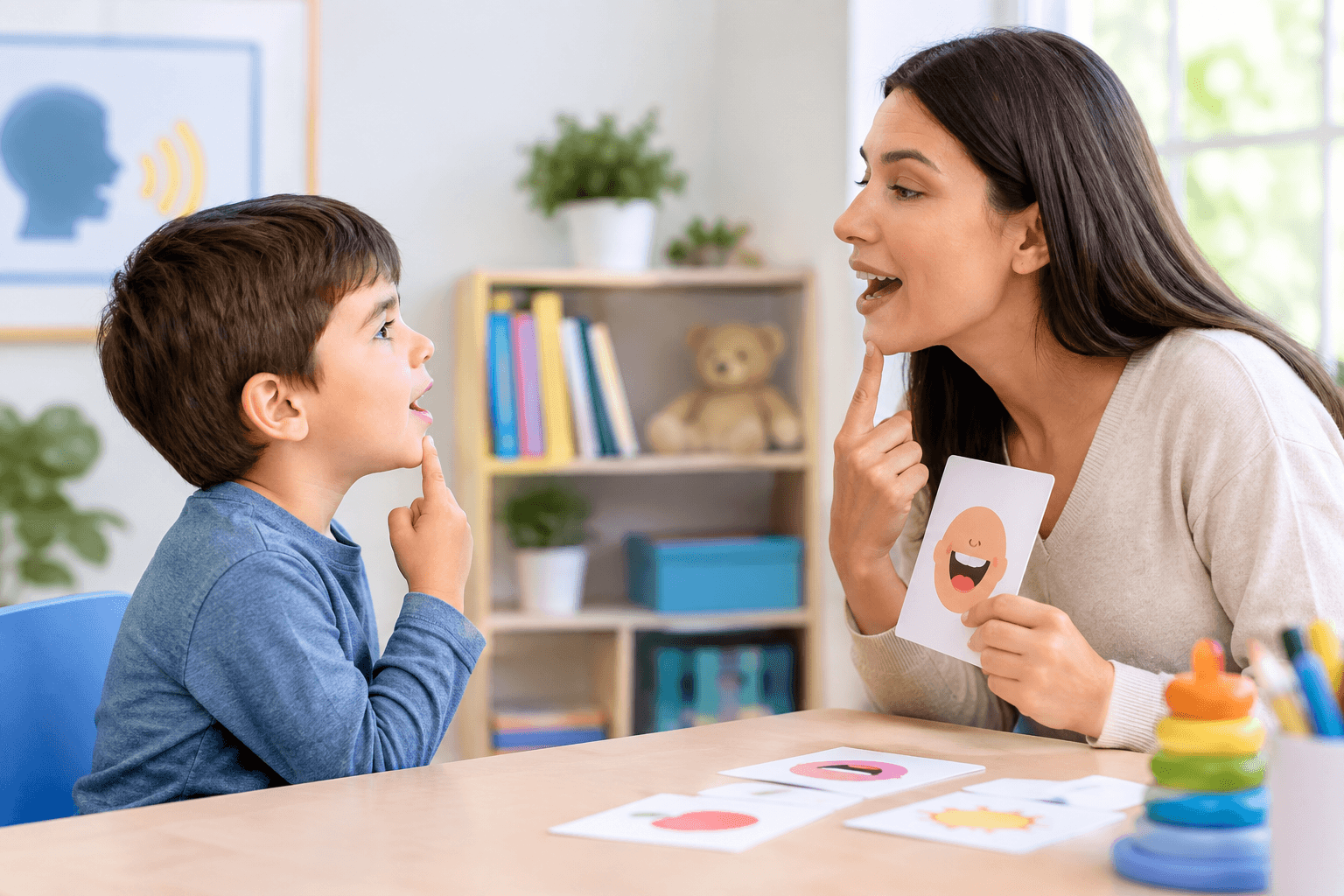
Speech delay therapy is a structured program run by a certified Speech-Language Pathologist, also called an SLP
The SLP first assesses where your child currently is, identifies the gap from expected milestones, and builds a personalised plan around that
For younger children, sessions are play-based so the child stays engaged and the learning feels natural
Therapy targets sound production, vocabulary, sentence building, and communication confidence depending on what the child needs
Parents are taught specific exercises to use at home between sessions, which speeds up progress noticeably
Most children show measurable improvement within 8 to 12 weeks when therapy is consistent
Delayed Speech Treatment Explained in Simple Words
Delayed speech treatment usually starts with a proper evaluation. A speech language pathologist listens to your child, watches how they play, and figures out where the block really is. Word finding? Sound making? Understanding others? Each one needs a slightly different plan.
Many families at this stage also explore online stuttering therapy if their child shows early stuttering signs on top of the delay. Online sessions have grown a lot lately, and for good reason. Kids feel safe at home, parents can watch and learn, and scheduling is way easier. You can also read our post on early signs to watch for in your child's speech to know what to expect next.
Common signs your child may need help
Fewer than 50 words by age two
No two word phrases by two and a half
Hard to understand at age three
Big frustration when trying to talk
Child Speech Delay Treatment That Actually Works
Child speech delay treatment works best when it feels like play, not therapy. Kids do not respond well to pressure or drills. They respond to games, silly voices, songs, and lots of praise. That is why great therapists spend more time on the floor with toys than sitting across a table with flashcards.
Proven techniques you can start using today:
Modeling: Repeat the correct word without correcting your child harshly
Expansion: Add one or two words to whatever your child says
Choice offering: "Do you want apple or banana?" pushes them to speak
Reading together daily: Books with rhyme and rhythm build language naturally
Slowing your own speech: Kids copy exactly what they hear
Speech Delay in Toddlers Treatment: Early Steps That Help
Speech delay in toddlers treatment often begins right at home. For children under three, therapy usually looks like guided play. A therapist may show up with a bag of toys, sit on the carpet with your little one, and slowly build talking through pretend play. Nothing fancy. Just meaningful connection.
What toddler focused therapy usually looks like
Building joint attention, meaning looking at the same thing together
Turn taking through simple back and forth games
Encouraging first words through highly motivating toys
Pairing gestures with speech to build meaning
Making sounds fun through music and rhythm
Parents get coached too. You will learn how to sneak language into bath time, snack time, and car rides. For more, see our guide on toddler speech milestones.
Autism Speech Delay Treatment: A Gentle Approach
Autism speech delay treatment needs extra patience and lots more customization. Kids on the spectrum process language differently, so pushing them like neurotypical kids rarely works. It can actually backfire and cause more shutdown or frustration.
Good autism focused work blends speech therapy with sensory awareness, visual supports, and steady routines. Some children thrive with picture exchange systems. Others do better with tap to talk apps before they can say words out loud. There is no single right path.
What matters most is meeting your child where they are, celebrating tiny wins, and never turning talking into a fight. Progress often looks slow, then shows up in beautiful, unexpected bursts. You may also find our stuttering in children guide helpful for related concerns.
Speech Delay Autism Treatment Options You Can Explore
Speech delay autism treatment can include a mix of these methods:
Applied behavior analysis with a speech focus
DIR/Floortime, which follows the child's lead
PROMPT therapy that uses gentle touch cues to guide mouth movements
AAC devices that let nonspeaking kids communicate through pictures or text
Play based sessions that keep pressure low and confidence high
Some families add music therapy or occupational therapy alongside. If you feel overwhelmed by all the choices, you are not alone. Most parents try a few things before finding the right blend for their child. Talking to other autism parents in online communities can genuinely save you months of guessing.
Treatment for Speech Delay Beyond Traditional Therapy
Treatment for speech delay does not always mean weekly clinic visits. Newer approaches, especially ones based in brain science, are changing how families think about progress. Some programs focus on rewiring the neural patterns behind speech instead of drilling sounds over and over.
Why parents are exploring new options
Traditional therapy can be slow and pricey
Some kids plateau after months of standard sessions
Brain based methods often show faster gains
Home based programs give parents more control
Online sessions cut travel and scheduling stress
More families are combining a bit of clinical therapy with a home program and supportive parenting. Learn more from our post on effective home based speech help. When those three pieces work together, kids often surprise everyone.
Treatment of Speech Delay Through Whole Family Involvement
Treatment of speech delay only really sticks when the whole family joins in. A therapist may see your child one hour a week. You are with them the other 167 hours. That math alone shows why parent training is so important.
Simple daily things that add up fast:
Narrate what you are doing out loud, like "Now I am pouring the milk"
Pause and wait after asking a question
Read the same books over and over, because repetition builds language
Sing songs with hand actions
Reduce screen time and boost face to face talk
Grandparents, older siblings, even the babysitter can pitch in. Consistency across environments beats any one perfect therapy session.
For Speech Delay Treatment, Consistency Beats Perfection
For speech delay treatment to actually work, you do not need to be perfect. You need to be consistent. Five minutes of focused, playful language work every single day beats one intense hour once a week.
Build small habits around existing routines:
Morning: name each clothing item as you dress
Meals: talk about colors, tastes, and textures
Bath time: play with toys and describe what happens
Bedtime: read one short book and ask simple questions
Kids thrive on repetition. When speech practice becomes part of ordinary life instead of a scheduled event, they stop resisting it.
What Are Treatment Options for Speech Delay Charlotte NC Families Ask About?
What are treatment options for speech delay Charlotte NC parents typically consider? The same ones families in every US city look at: private speech therapy, early intervention programs, school based services, and online options. Location matters less than commitment and picking a method that fits your child.
More parents across North Carolina, and honestly across the whole country, are turning to virtual sessions and neuroscience backed programs. Why? They remove drive time, waitlists, and geographic limits. Online therapy also gives kids the comfort of home, which often speeds up trust with the therapist. If local waitlists feel forever long, exploring online help is a smart move.
Treatment Speech Delay Rooted in the Neuroscience Method
Treatment speech delay is entering a new chapter, thanks to the neuroscience stuttering that looks at how the brain forms and maintains speech patterns. Instead of just working on the mouth and sounds, this approach targets the neural pathways behind fluent, confident speaking.
For kids who struggle with both speech delay and early stuttering, this brain first angle can be a real game changer. It works with your child's natural wiring instead of against it. Parents share stories of faster confidence gains, less frustration during practice, and a real sense that their child is finally getting it, not just parroting sounds.
Frequently Asked Questions
When should I really worry about my toddler's speech delay?
If your child is not saying single words by 15 months, not using two word phrases by age two, or their speech is hard to understand at three, it is time to speak with a specialist. Trust your gut.
Can speech delay be fully cured?
Many kids fully catch up with the right support, especially when help starts early. Some need ongoing work, but steady progress is common and totally realistic.
What is the best age to start speech delay treatment?
Between 18 months and three years is the sweet spot, but treatment truly helps at any age. Never think it is too late to begin.
Is online speech therapy actually effective for young kids?
Yes. Research and thousands of family stories show online sessions can match in person results, especially when parents stay involved throughout.
Does speech delay always mean autism?
No. Many children with speech delay are completely neurotypical. Only a full evaluation can tell you what is really going on with your child.
Types of Speech Delay Therapy That Actually Work
One-on-one sessions with a licensed SLP is the most researched and widely used approach
Parent-implemented therapy trains caregivers to use specific techniques during bath time, meals, play and other daily routines
The Hanen "It Takes Two to Talk" program is designed specifically for parents of toddlers and is very well regarded
Augmentative and Alternative Communication, known as AAC, supports children who are not yet producing words verbally
Social communication groups give older children a structured setting to practice talking with peers
Intensive therapy programmes offer more sessions per week for children with moderate to severe delays and tend to close gaps faster
Ready to Give Your Child the Best Start Possible?
Treatment speech delay works best when you do not wait, and when you choose a guide who truly cares. Every day your child gets the right support is a day closer to joyful, confident talking. StopStutter has walked this road with many families, blending science with warmth and practical tools that fit real life. If you are ready to talk with someone who actually listens, book a free consultation today. No pressure, no sales script. Just a real conversation about your child and what could help most. Your little one's voice is absolutely worth showing up for.
Ready to Put This Into Practice?
Download the app and start practicing today
Reading is the first step. Real progress comes from consistent daily practice. Use StopStutter to build confidence and improve your speech every day.


