


Online Stop Stuttering Therapy, speech development, neuroscience method, Speech Therapy
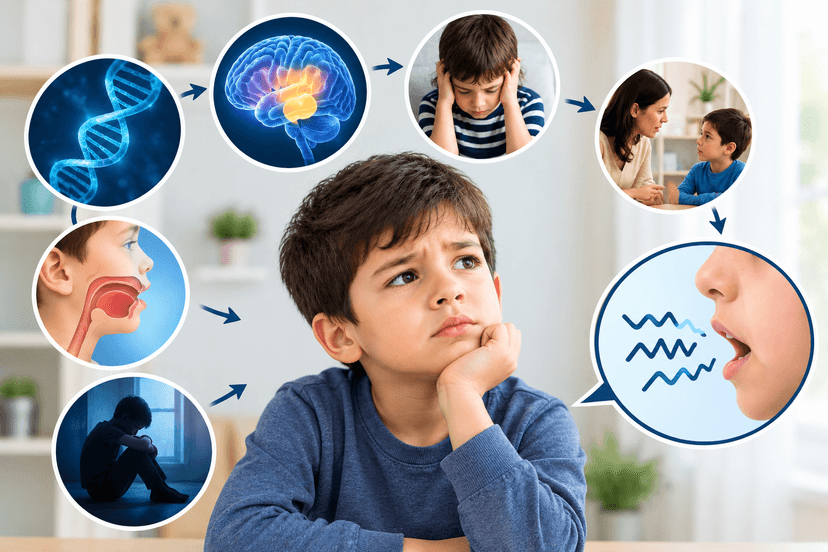
Most people who stutter can't name the day it started. Parents usually remember a phase somewhere around age three, when words began catching and repeating. Some adults who spoke fluently their whole lives notice it suddenly after an illness or an injury. Either way, people end up asking the same...
By Team WSSA (September 25, 2026)

Stuttering Treatment, Online Stop Stuttering Therapy, Speech Therapy, neuroscience method
If you've stammered since childhood, you've probably heard every explanation under the sun. Nerves. Shyness. Talking too fast. Something that happened when you were little. Most of these theories get passed around at family dinners and in school corridors, and very few of them hold up once you look at...
By Team WSSA (September 25, 2026)

Stuttering, Speech Therapy
Drugs for stuttering exist only in a limited sense, because no medicine is approved by the FDA to treat it. A few prescription drugs have reduced stuttering a little in small studies, but they come with side effects and the results do not last once you stop taking them. Ecopipam,...
By Team WSSA (September 24, 2026)

Stuttering Treatment, Online Stop Stuttering Therapy, Speech Therapy
If you stutter, you probably know the feeling well. You have something to say, you know exactly how you want to say it, and then your body tightens up before the first word even leaves your mouth. Over time, those moments pile up. You start ordering the food that's easier...
By Team WSSA (September 24, 2026)

Online Stop Stuttering Therapy, Stuttering Treatment, Speech Therapy
If you've ended up here, you're probably filling out a form, reading a speech evaluation, or trying to figure out why an insurance claim came back with a code you don't recognize. The ICD 10 code for stuttering depends mostly on one thing: when the stutter started. Stuttering that began...
By Team WSSA (September 24, 2026)
neuroscience method, Speech Therapy, Online Stop Stuttering Therapy
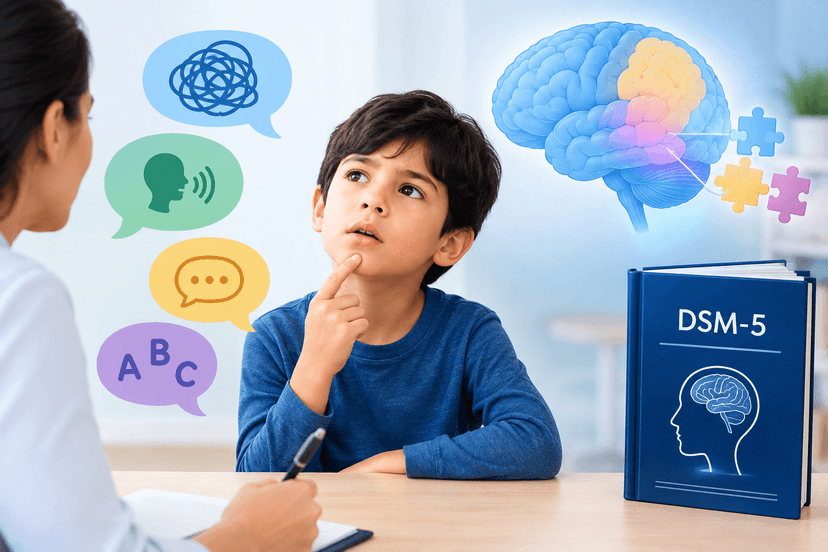
If you searched “language disorder DSM 5,” there’s probably a document in front of you. It might be an evaluation report, a school email, or a page of textbook notes. Here’s the short version. In the DSM 5, a language disorder is a lasting difficulty learning and using language. It...
By Team WSSA (September 24, 2026)


